Expression & Play
The joy of exploration and making a mess
Art has always been a space for me to breathe — to pause and reconnect with colour, texture, and the moment in front of me. Over time, I’ve learned that creativity isn’t about control, it’s about curiosity. When I release expectation and allow play, mark-making becomes a form of mindfulness — a gentle act of compassion toward both myself and the process.
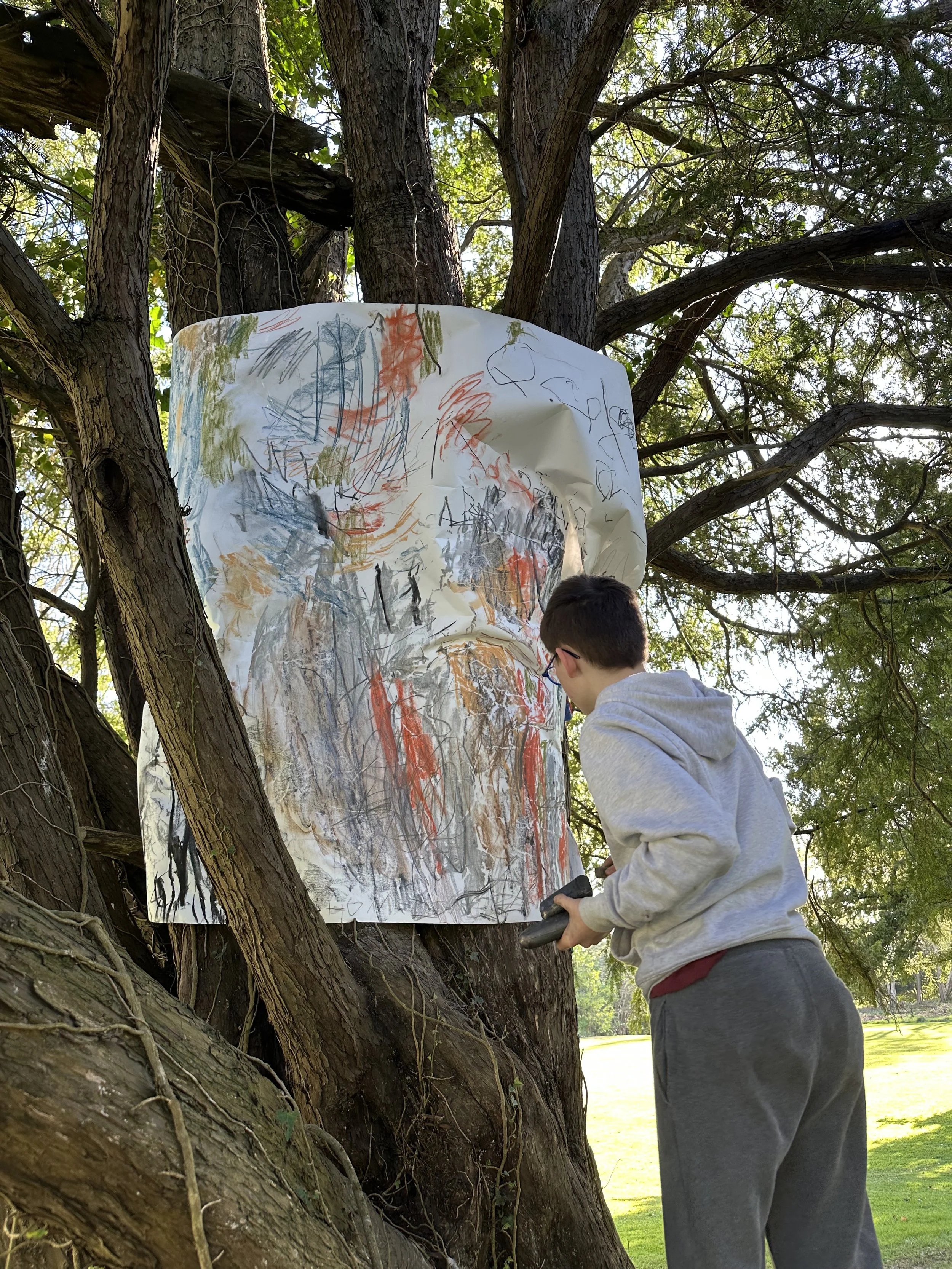
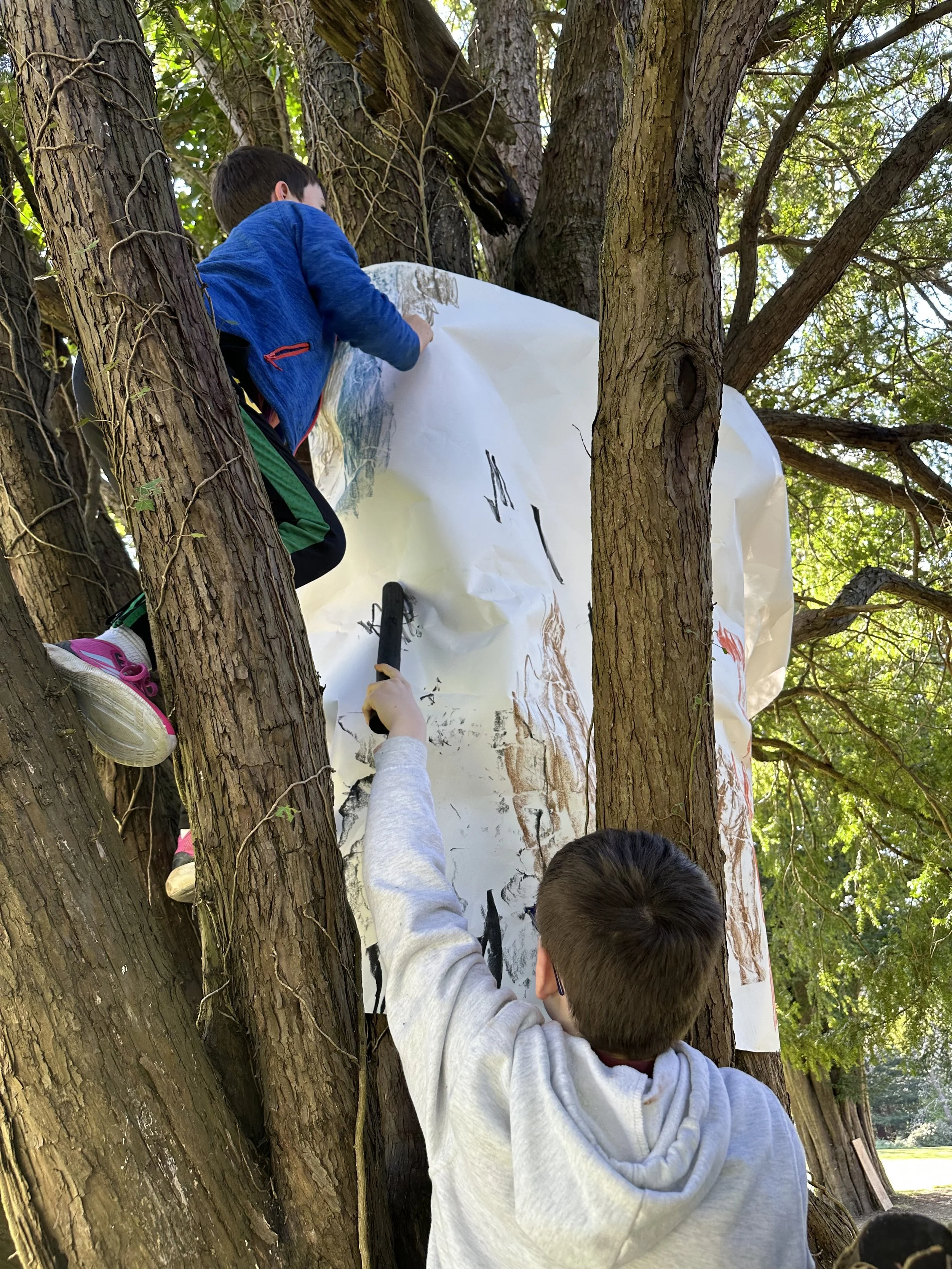
I find that true expression often begins in the simplest gestures: a line, a cutout, a fingerprint…Whether I’m making tree rubbings with my grandchildren, experimenting with unfamiliar materials, or talking and collaborating with other artists. I try to stay open to the joy of exploration and the quiet meaning that arises from it. The mess, the mistakes, the surprises — they’re not distractions from the work; they are the work. They hold the story of discovery.
Mess & Meaning: The Joy of Making Marks
What does mark-making mean to me?
It’s an open invitation to make every kind of mark with charcoal or paint on paper or canvas, or even as stitch on fabric. Sometimes it begins as a response to a prompt, other times it’s simply about being present and letting instinct take over.
Beginnings
My earliest memories of making marks go back to my first school. We were asked to write about birds and draw them. Somewhere I still have an exercise book filled with those early enquiries. Another project invited us to imagine our ideal home and draw it. I think that’s when I first experienced the joy of translating imagination into marks.
When I was very young, creativity was also about texture and touch, with activities like knitting, stitching, dressing dolls. My mother, our nanny Pamela, and Kathleen, who worked for my maternal granny, all encouraged this sense of making. And of course, there were “mud pies” with my neighbour Caroline, although, according to my nanny, I somehow managed not to get very dirty!
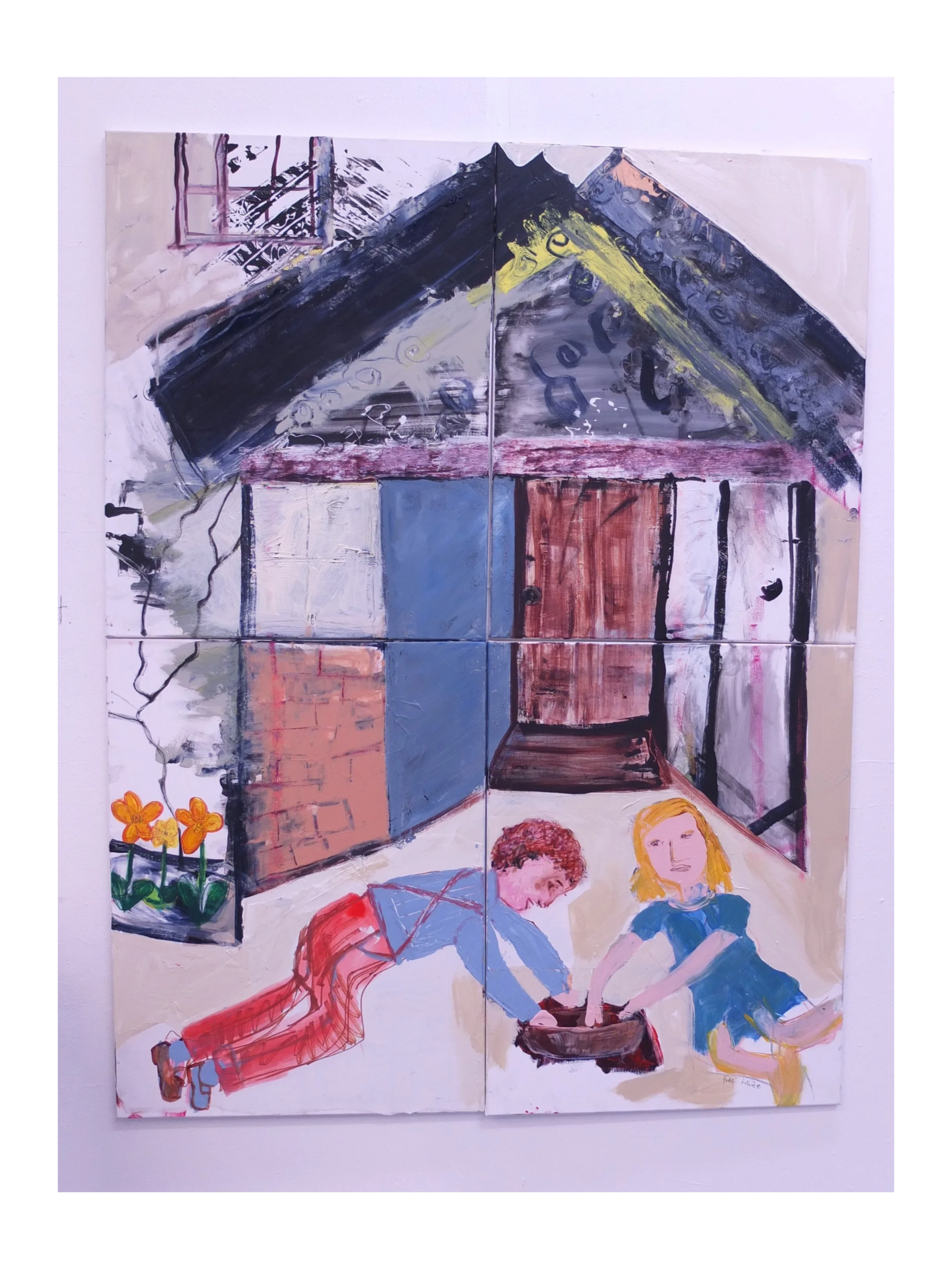
Making mud pies with Caroline
Losing Track of Time
The first time I truly lost track of time while creating was probably on an early painting course with Emily Ball, first at Rackham Village Hall, and later in the chilly, unheated upstairs space at Seawhite in 2005. There was no running water, so we’d traipse up and down the metal stairs to rinse our brushes or wash the charcoal from our faces. Despite (or maybe because of) those conditions, I was completely absorbed.
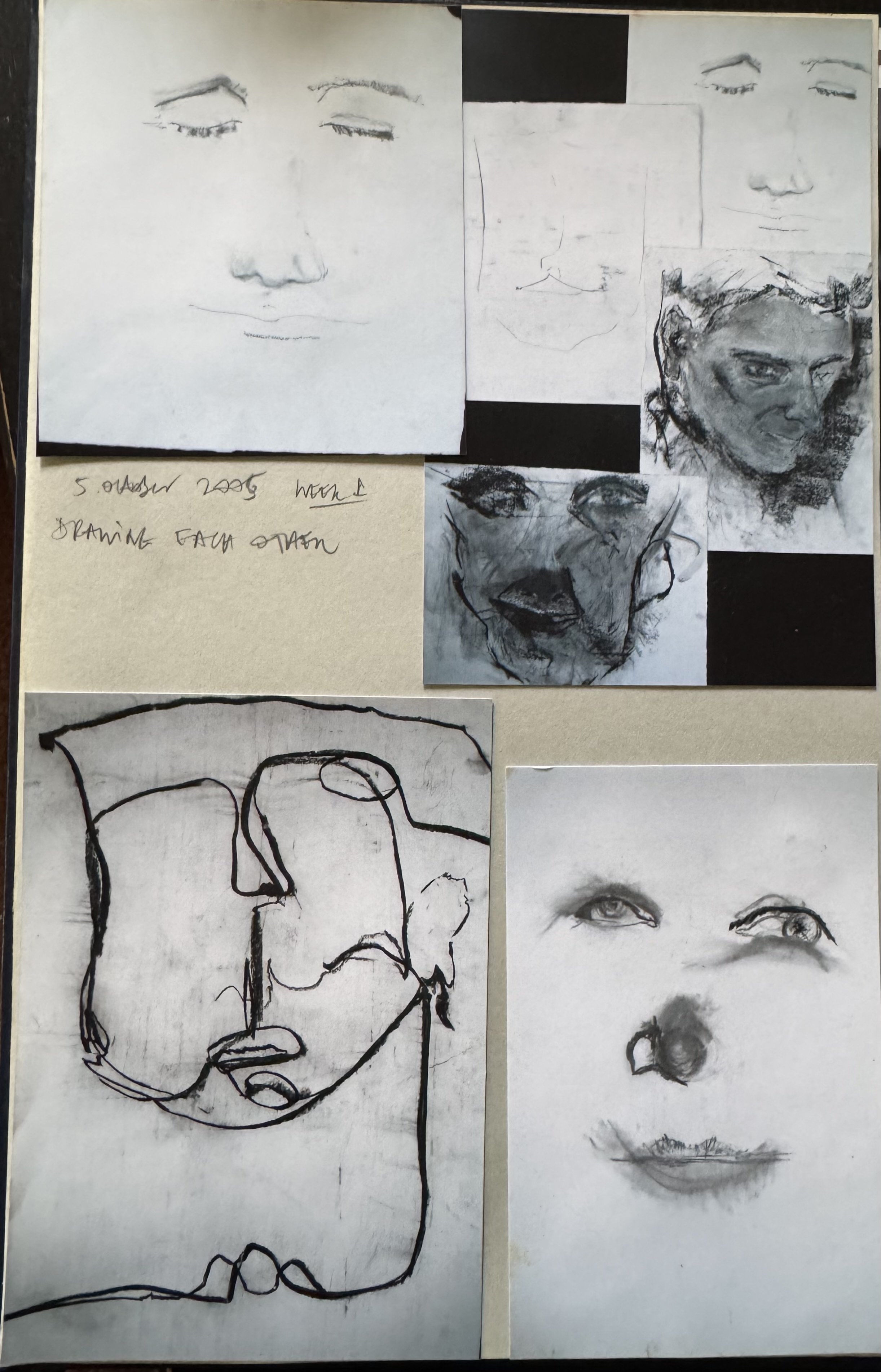
- Seawhite 5th October 2005 - Week 1
Mess & Meaning
Charcoal on a long bamboo stick is often my go-to starting point. It loosens me up and forces me to focus purely on the act of making a mark, since it’s so hard to control. Sometimes I’ll begin on top of an old study rather than a blank page, as the existing layers and colours give me something to respond to. It’s freeing and I now realise as writing this - I should do it more!
Knowing when to stop playing and start refining usually comes after sitting quietly with a cuppa and a chocolate digestive. That small pause seems to act as a reset.
When I’m in that messy, playful state, my studio feels irresistible, 'my happy place'.
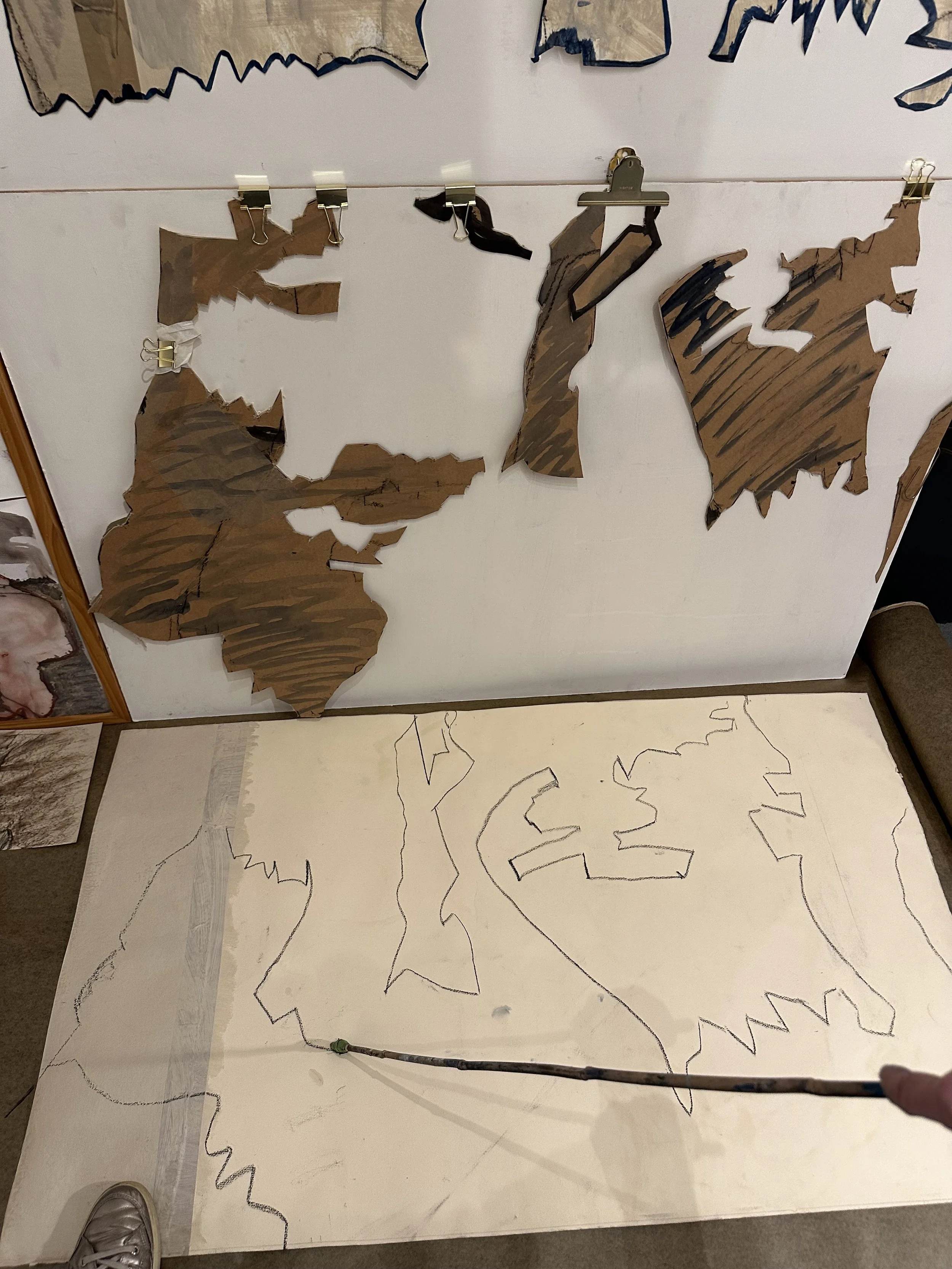
Charcoal on a long stick
Colour as a Feeling
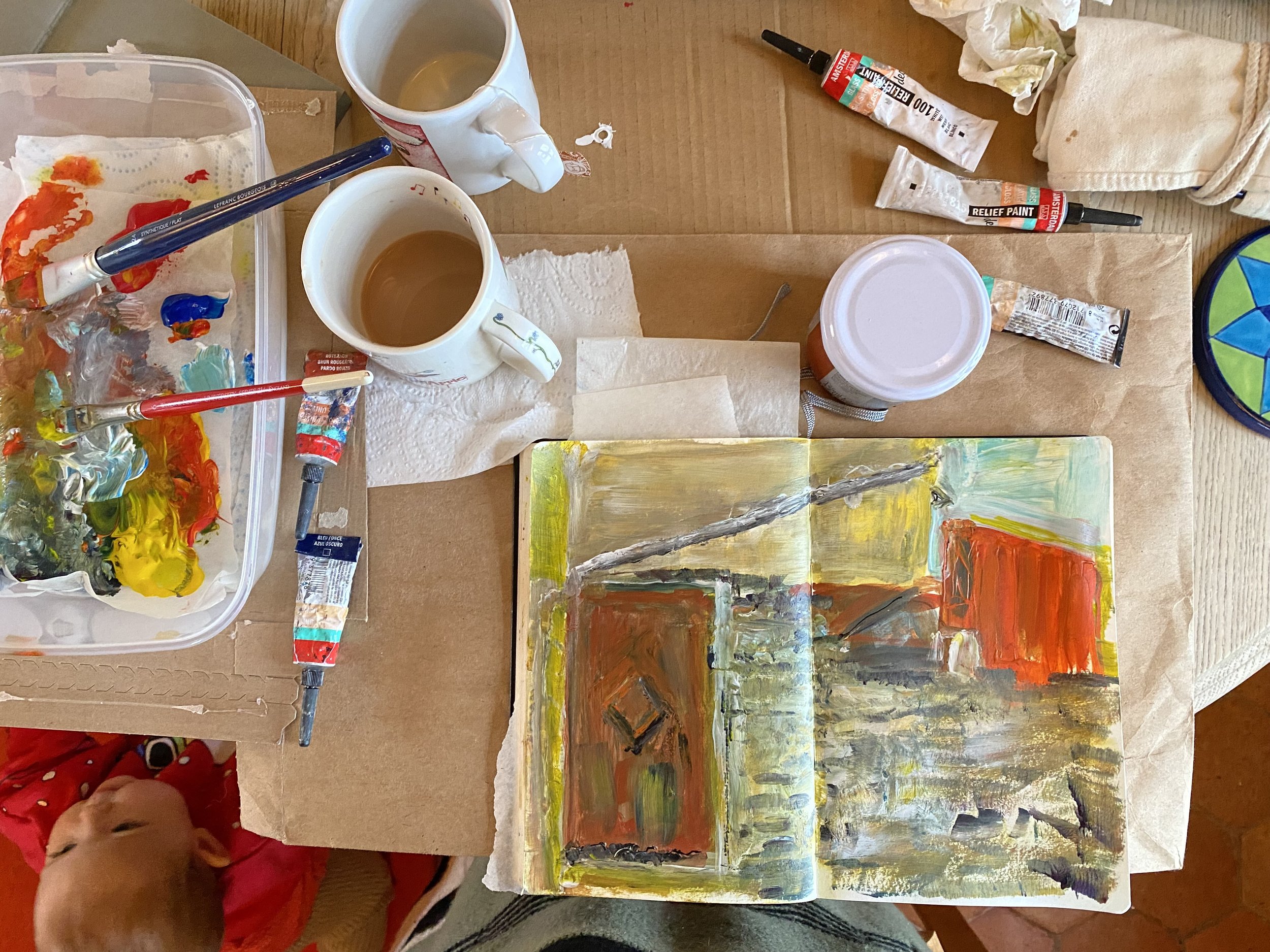
I choose colours instinctively, sometimes dictated by what’s at hand, especially when travelling. On visits to my daughter in France, I would pick up whatever was available in the local art shop. At Cornelissen in London, I can lose hours selecting Sennelier oil pastels or new inks.
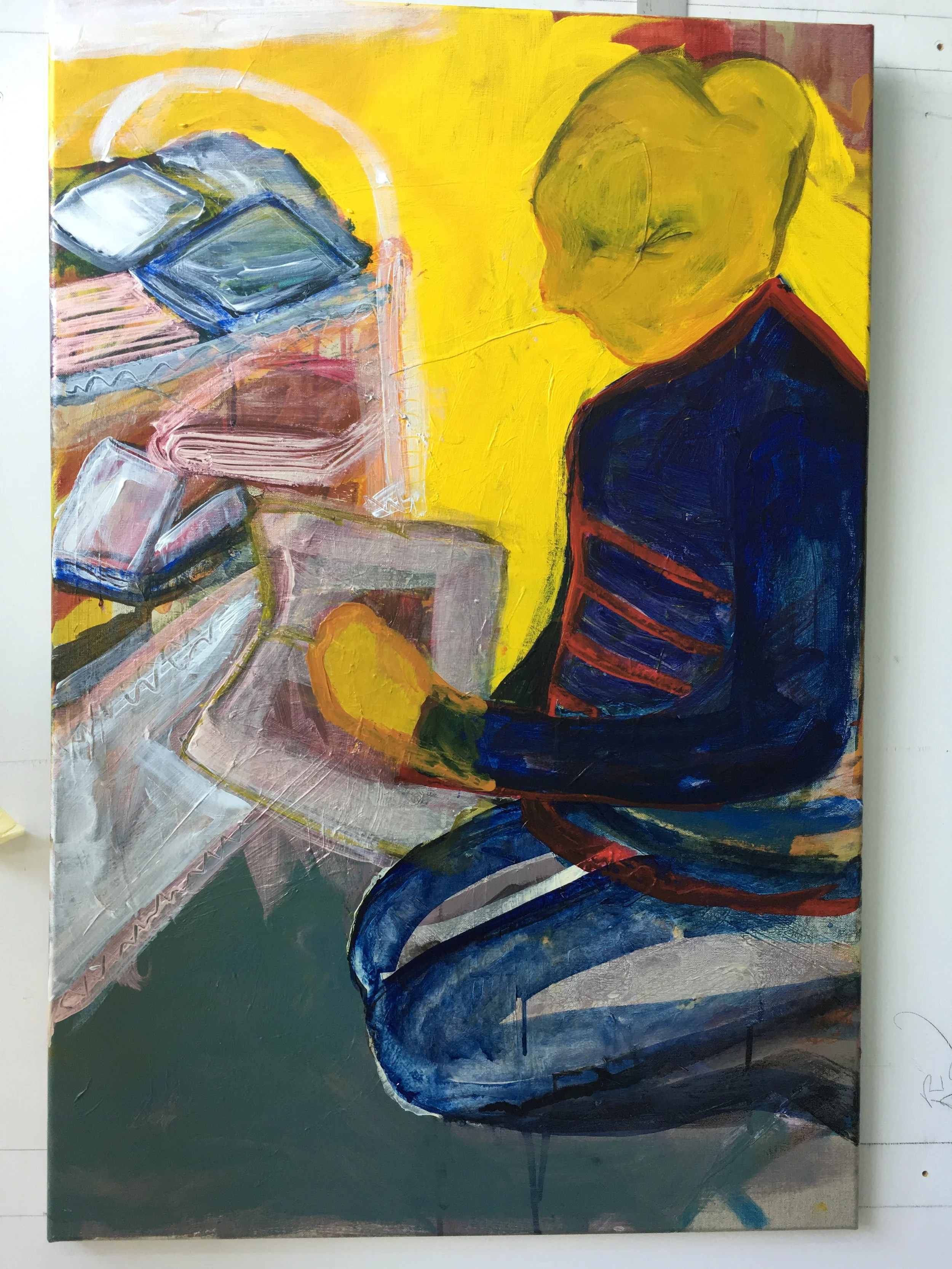
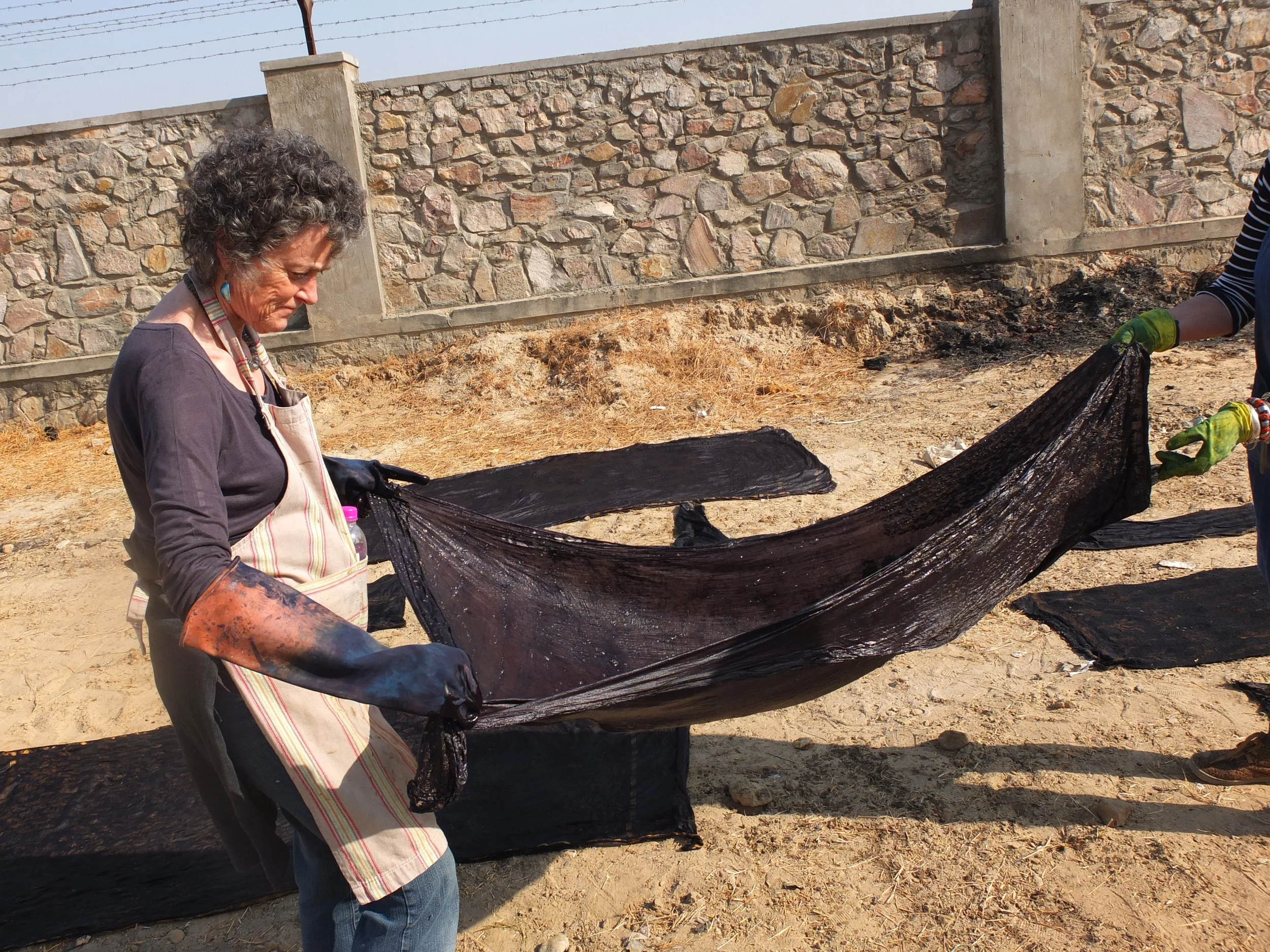
Occasionally, a “wrong” colour becomes just right. Once, I was encouraged to use yellow, first to edit, then again to brighten a painting by layering it over white. It worked beautifully. The colour I return to again and again is indigo. It resonates deeply, which probably explains why I so loved the mud resist and indigo textile dyeing course I took in Jaipur in 2013 — a truly unforgettable experience.
Outdoor Inspirations
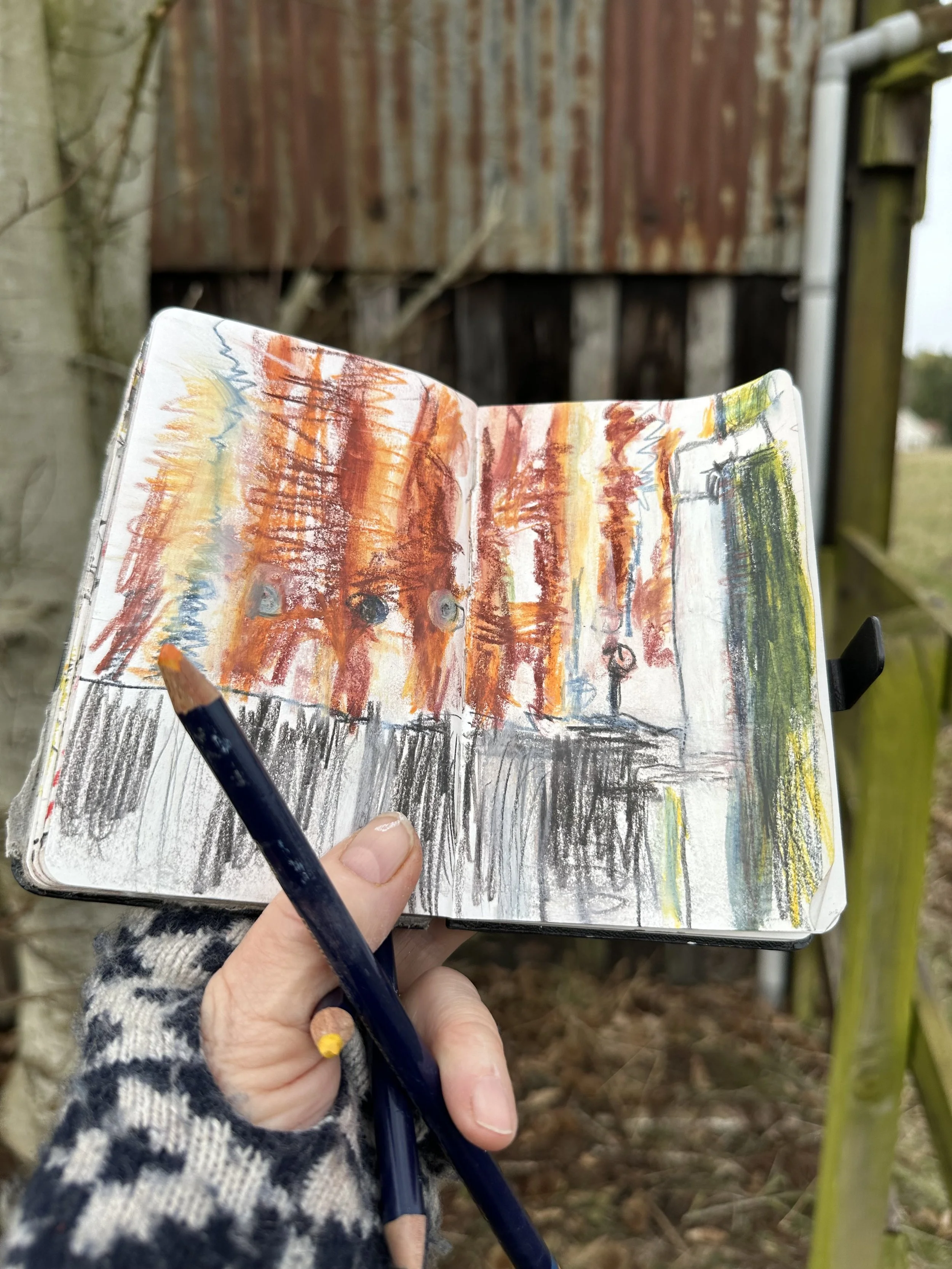
Nature continually feeds my work. When walking, I carry an art pack and small sketchbook to do quick 20-minute sketches, often of trees, buildings, or small, unexpected details. The rhythm of walking quiets my mind and opens my eyes to subtle combinations of shape, line, and colour. After sketching, my vision feels sharper — I see more.
One favourite memory is from a Lewis Noble course in 2012. We worked outside with A4 sheets and whatever materials we had, responding rapidly to the landscape, even as it rained. The rain often improved the drawings! Back indoors, we tore up those studies, collaged them, and developed them into paintings.
Closer to home, I now often work outdoors near the pair of Yew trees by my studio — they have become a recurring motif in my work.
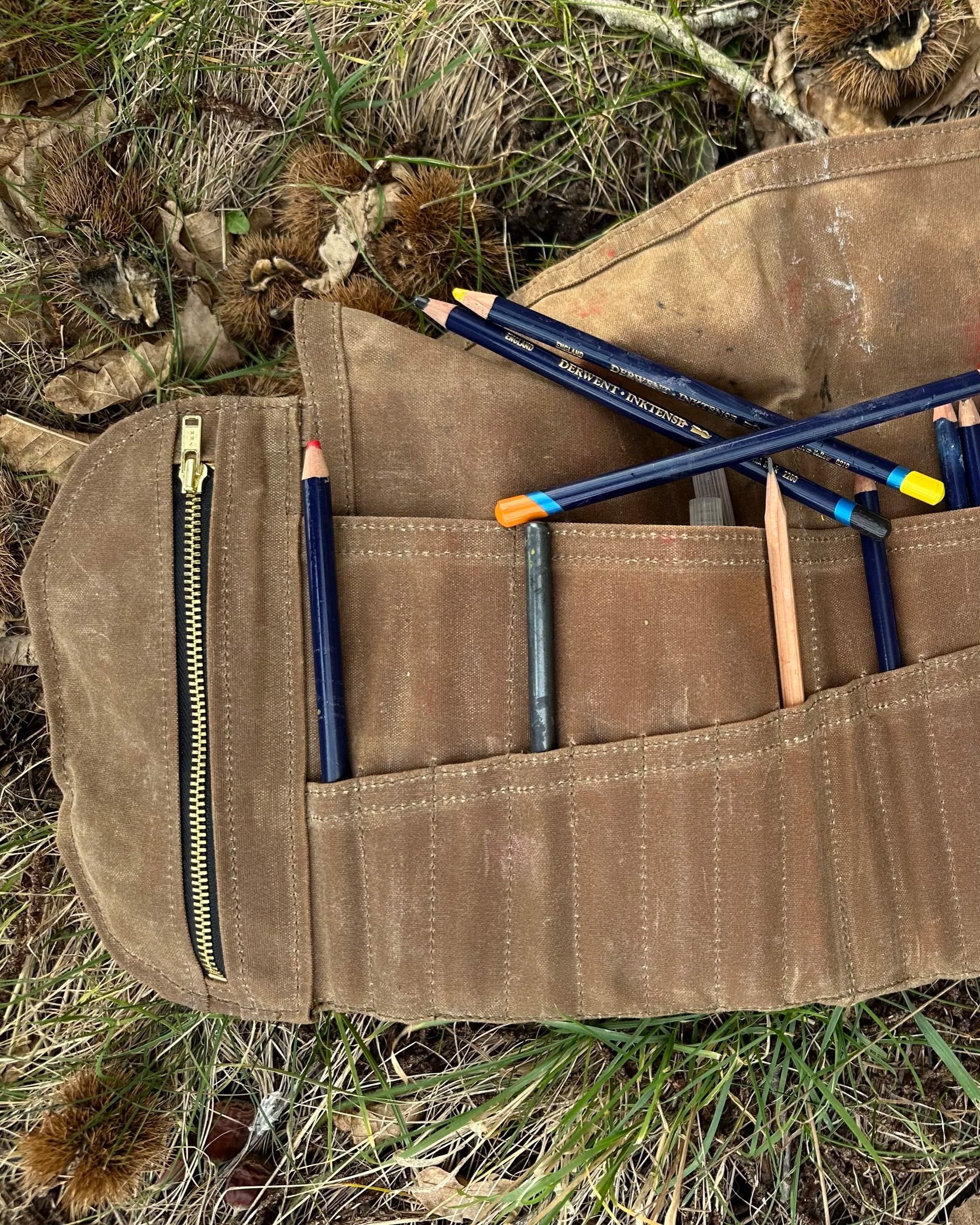
- My travelling art pack
Play with Family & Friends
Play has always been central to my practice. With fellow artists Edith Barton and Cherie Lubbock, I devised playful experiments; “wind drawings,” handmade brushes from driftwood, and cyanotype prints. These explorations often lead to new ideas, such as the “Forecast” exhibition we co-curated together in 2024.
With my grandchildren, play becomes magic. One favourite memory is wrapping a Yew tree trunk in a huge sheet of paper and doing bark rubbings with water-soluble charcoal. They constantly surprise me, for example when Jack suggested a new way to frame one of my stitched pieces so both sides could be seen.
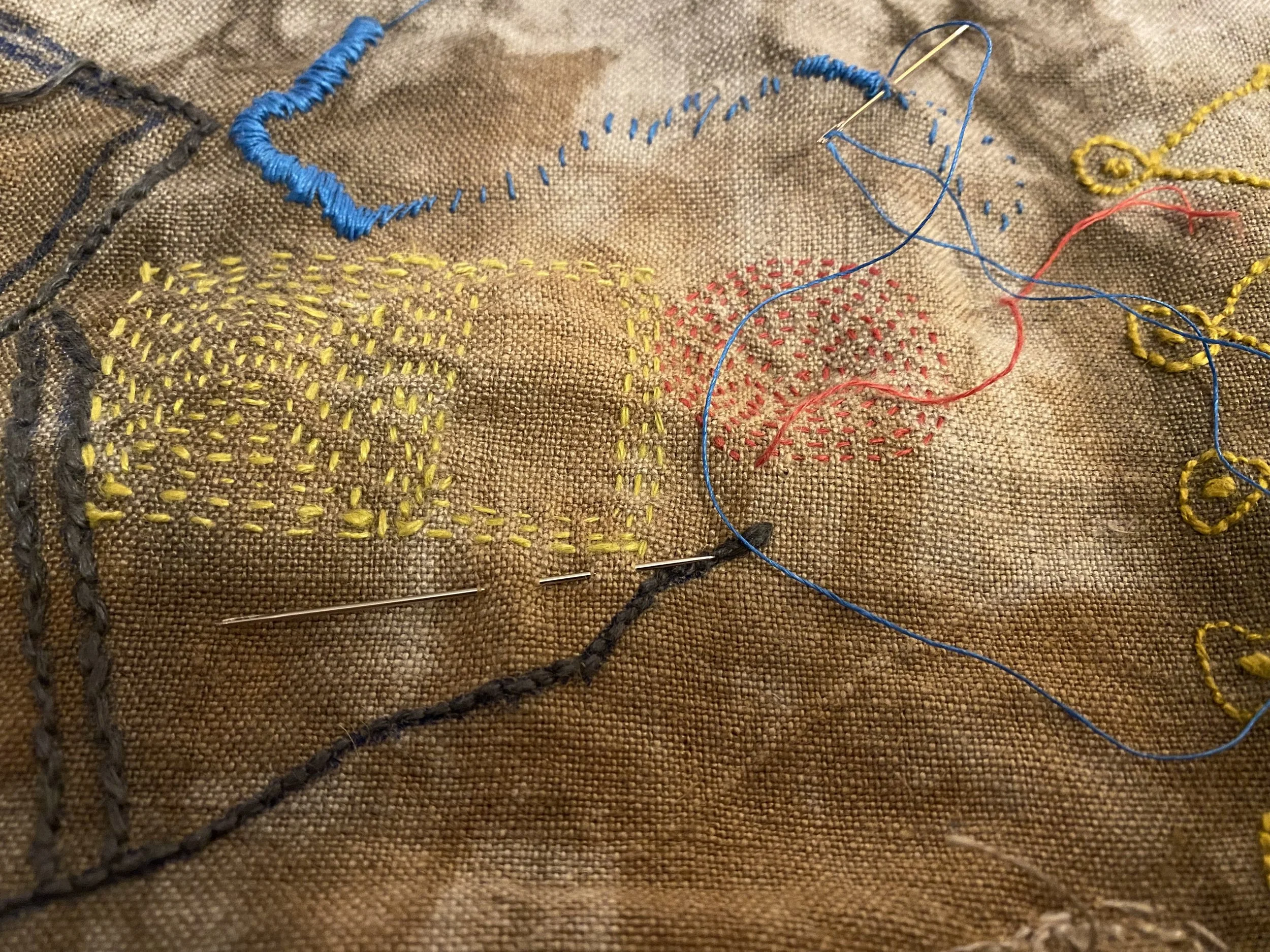
Even something that starts as a playful idea can grow into serious work. My year-long daily slow stitching project began that way, as a small experiment that evolved into my solo exhibition Tree Travelling and later inspired workshops.
Happy Accidents
I’ve come to value what used to feel like mistakes. A recent example was Chan Chan, an experimental piece I thought of as a study, until Lesley saw it in my studio and chose to frame it. These days, I give myself permission to leave in what might seem incongruous. Greater confidence allows space for imperfection.
Reflection
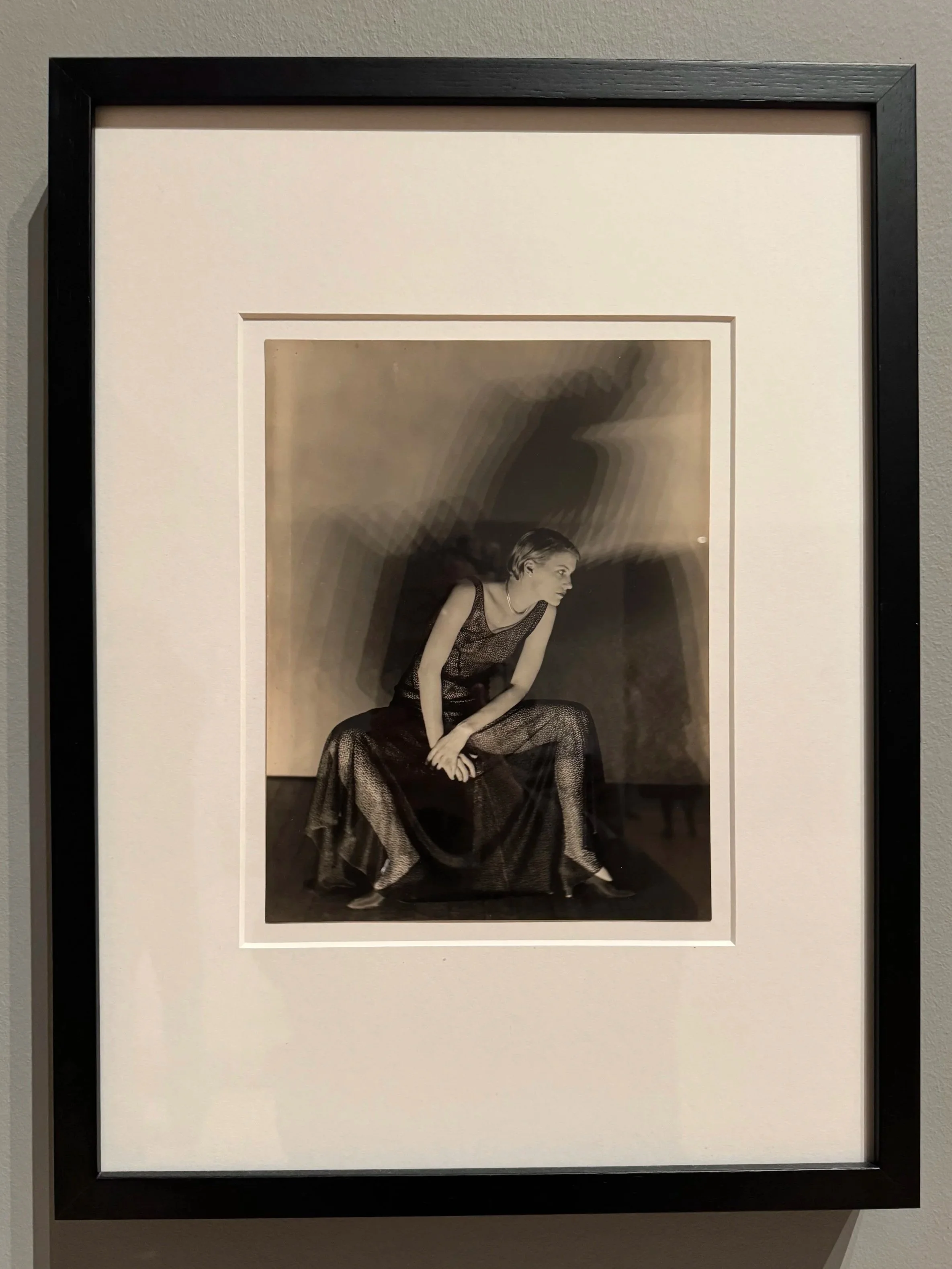
I realise now, on reflection, what keeps my creativity alive is my curiosity; about shadows, negative spaces, trees, rust... Visiting other artists’ studios and exhibitions also helps to recharge my imagination.
My creative time is very important to me and I protect it very simply - by showing up, by going into the studio, even when life gets busy.
There’s always been a thread - quite literally - of fabric running through my work. It’s taken me time to fully embrace combining fabric, paint, stitch, and canvas, but it now feels essential to my practice.
When people stand in front of my work, I hope they feel intrigued - their curiosity piqued by something they can’t quite explain...