Sharing is caring
Creative Community, Teaching, and Nurturing Artistic Curiosity
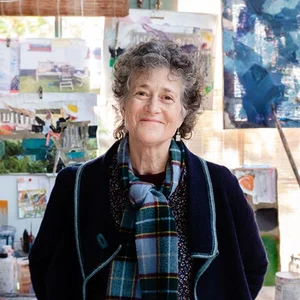
Sharing my creative practice has become an increasingly important part of my artistic life. What began as a quiet, personal relationship with materials and paint has gradually unfolded into something communal: a way of bringing people together, slowing down, and making space for curiosity, care and conversation. Through my slow stitching workshops, and informal gatherings with fellow Pure artists in particular, I’ve discovered that creativity deepens when it is shared, and that learning flows both ways.
Looking Back
My early education introduced me to embroidery and the basics of both hand and machine stitching. When I went on to study Textiles at The Surrey Institute of Art & Design in 1995, we were encouraged to be focused, determined and dedicated, especially within our specialist subject. For me, that became linen. The discipline of repetition, rhythm and commitment was embedded early on, and those values have stayed with me.
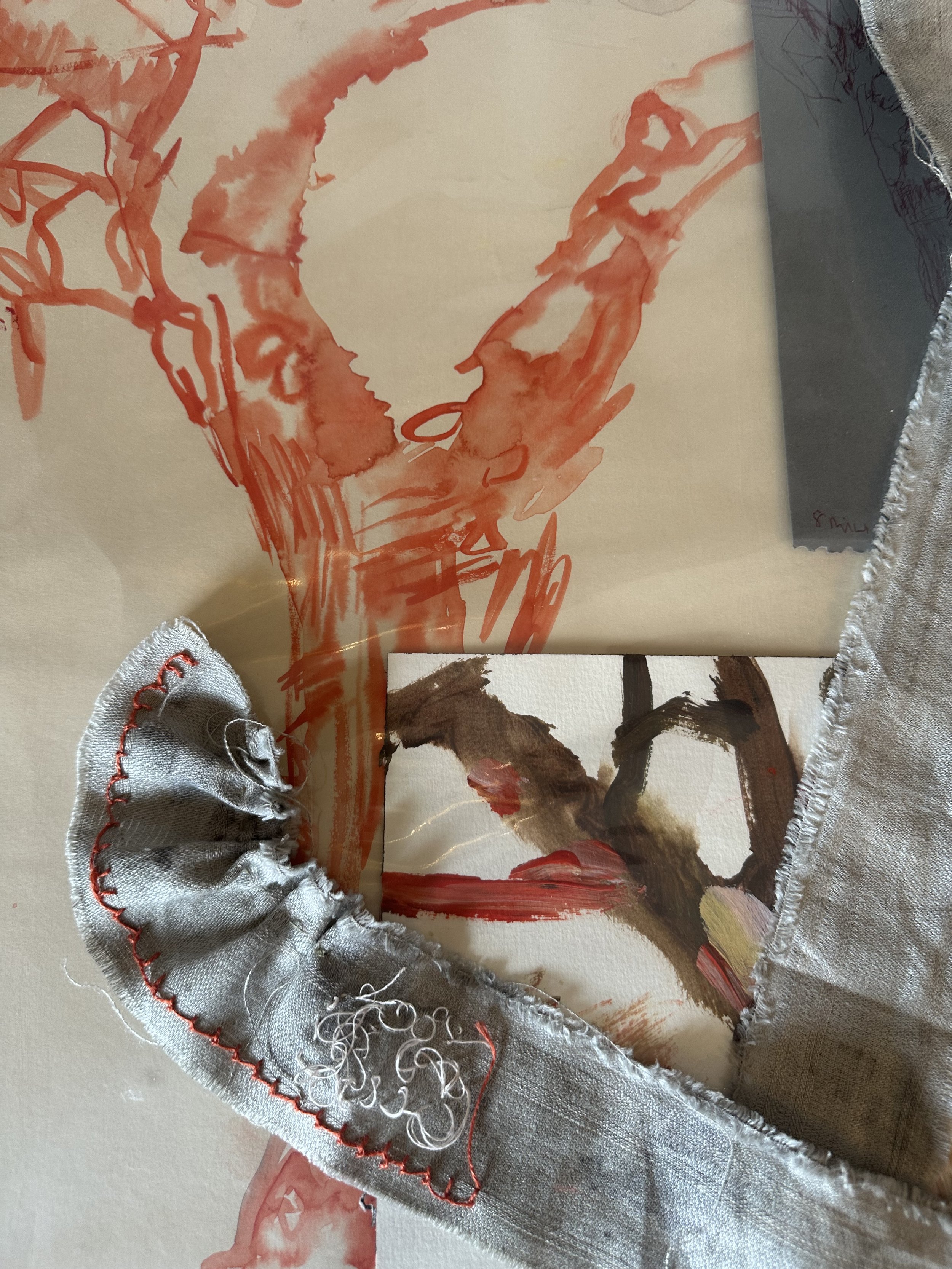
More recently, I’ve found myself consciously returning to organisation, diligence and commitment—ways of working that perhaps feel unfashionable now, but remain deeply grounding. Experience and time lived have also shifted how I value slowness, imperfection and care. I think it’s a renewed confidence that allows this to happen: the confidence to trust the process and not rush towards an outcome.
In sharing my practice with others, I feel I’m continuing, and perhaps repairing, a way of thinking and working that might be considered outdated. A slower, more attentive approach—one that values making as a form of thinking and being.
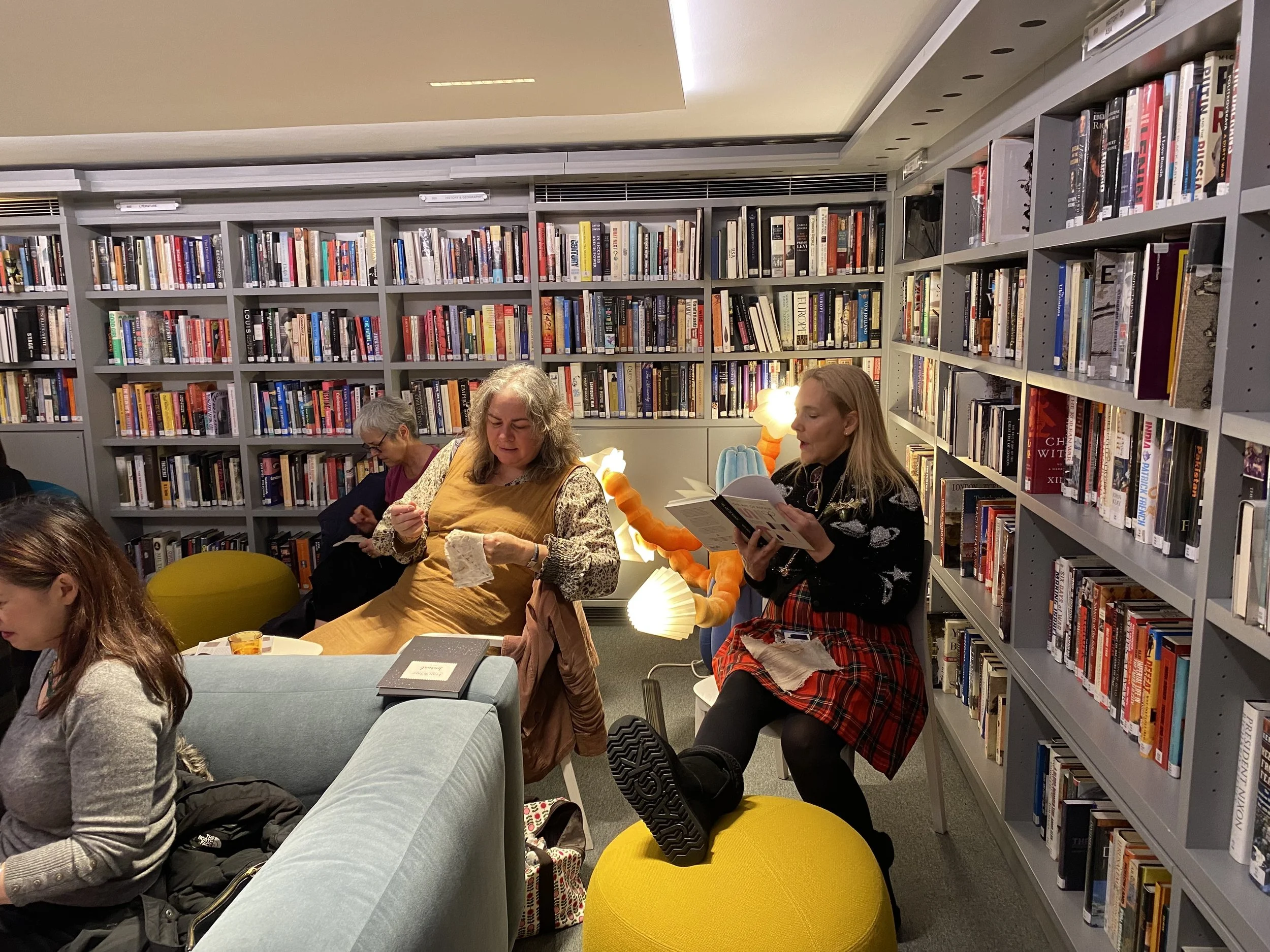
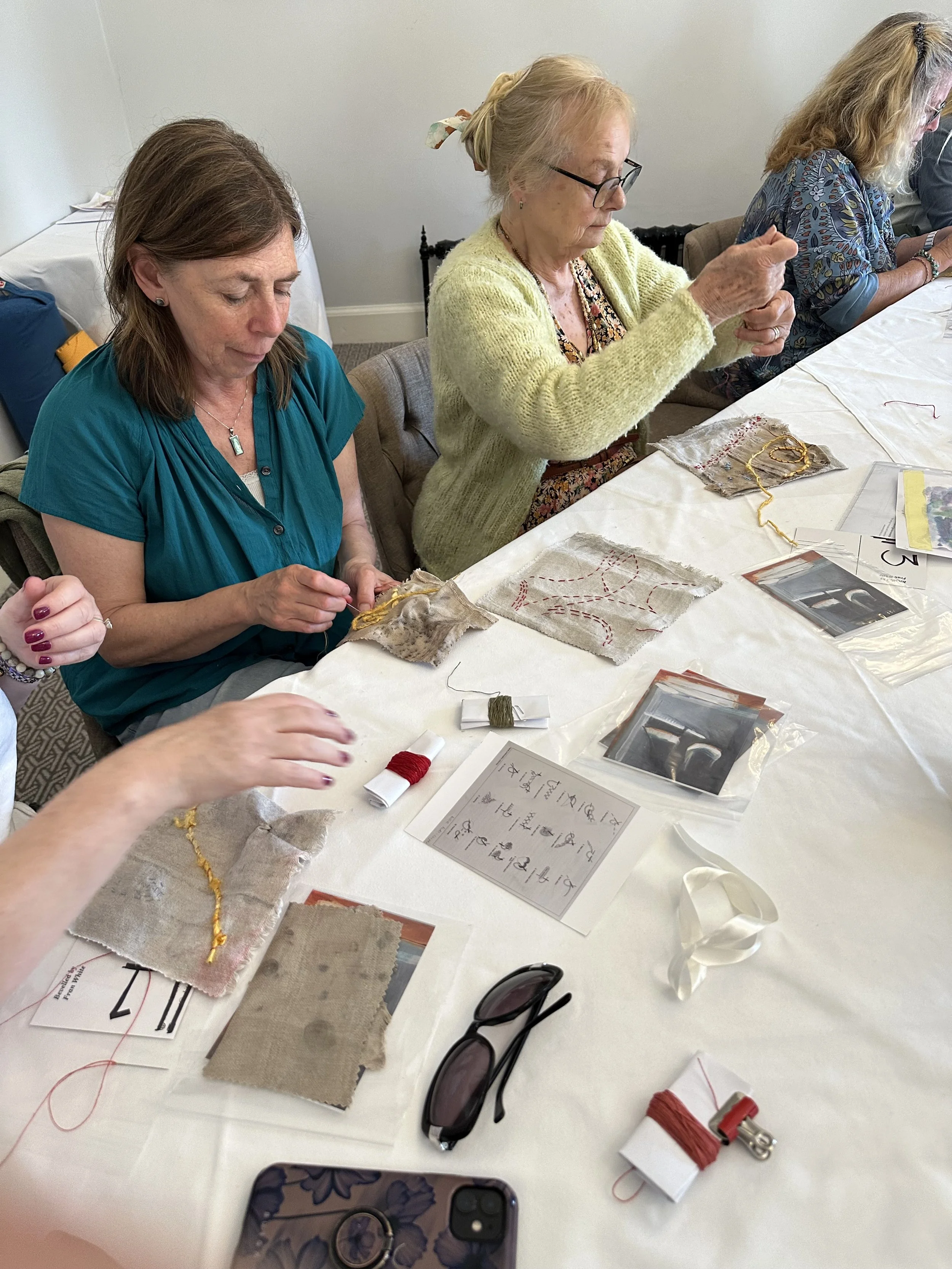
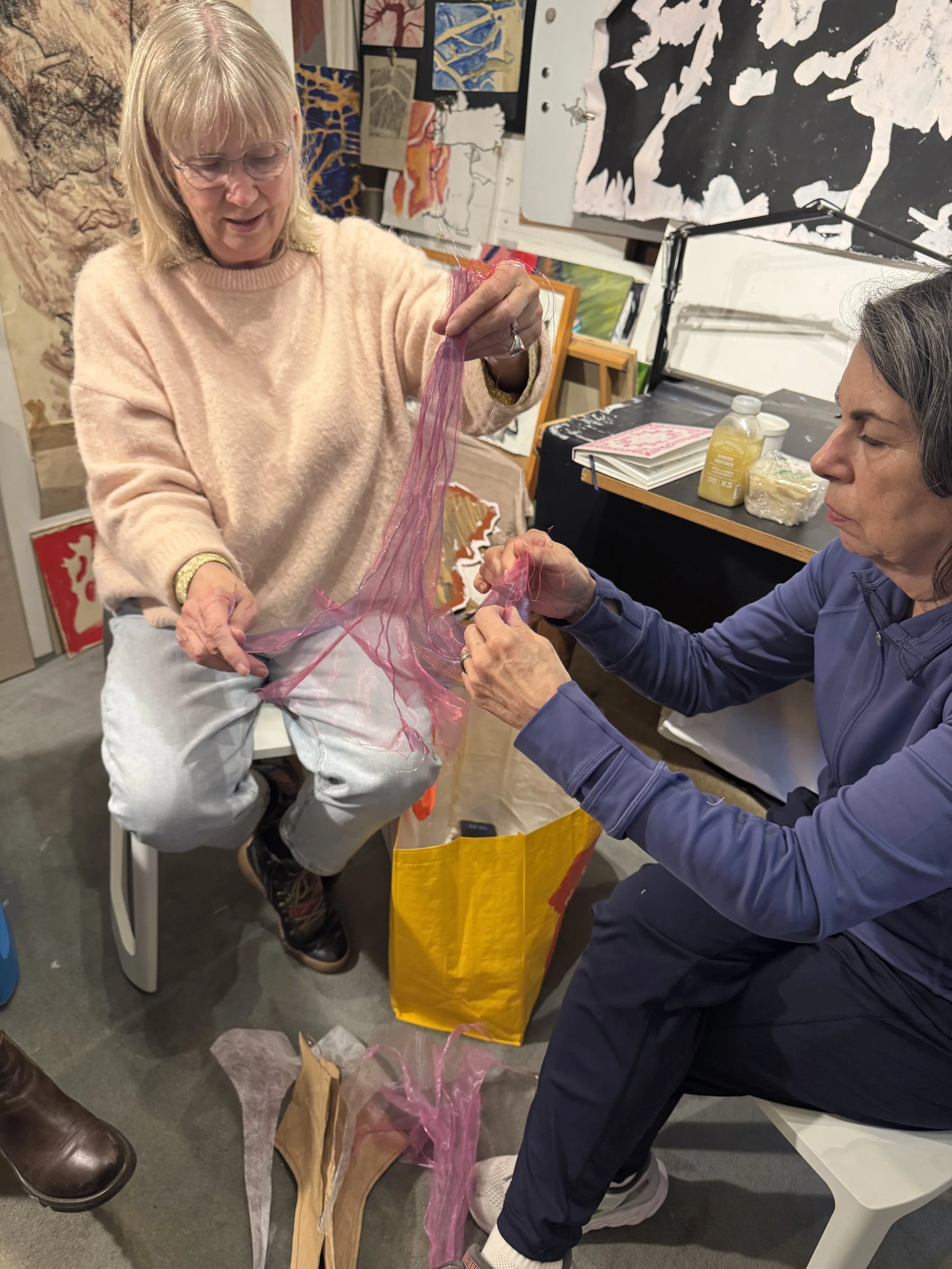
Workshops: Making Space
The idea to offer slow stitching workshops grew out of my Residency exhibition: Tree Travelling at Bannatyne Hotel, Hastings. I displayed slow stitch pieces made over eight months of daily stitching, clipped to upcycled wooden stretchers. Each month I worked on a different piece for just 20 minutes a day, using coloured threads to make simple marks, sometimes referring to sketchbooks or photographs—small details that had caught my eye. You can read more about this in my Journal article relating to my solo show.
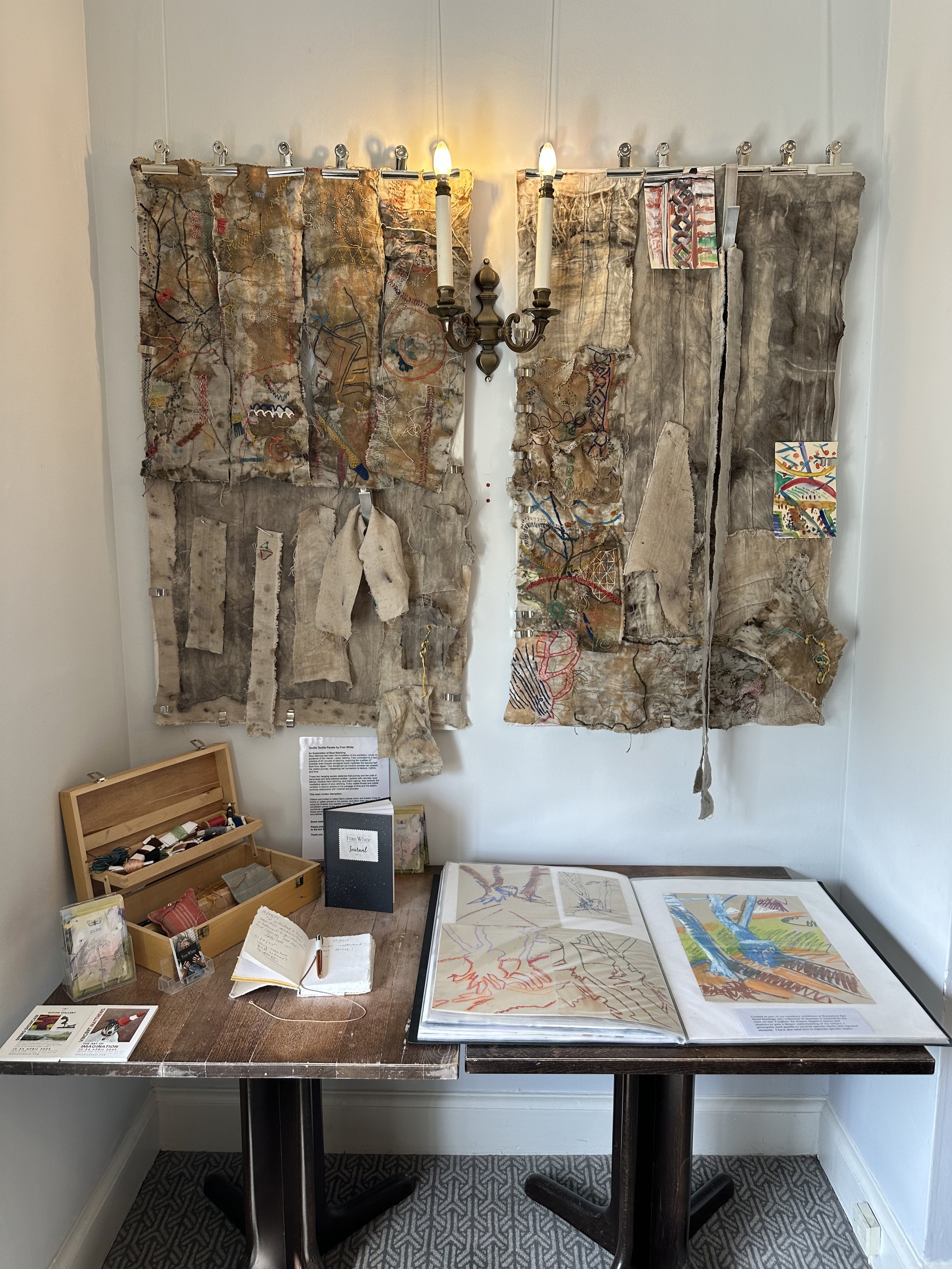
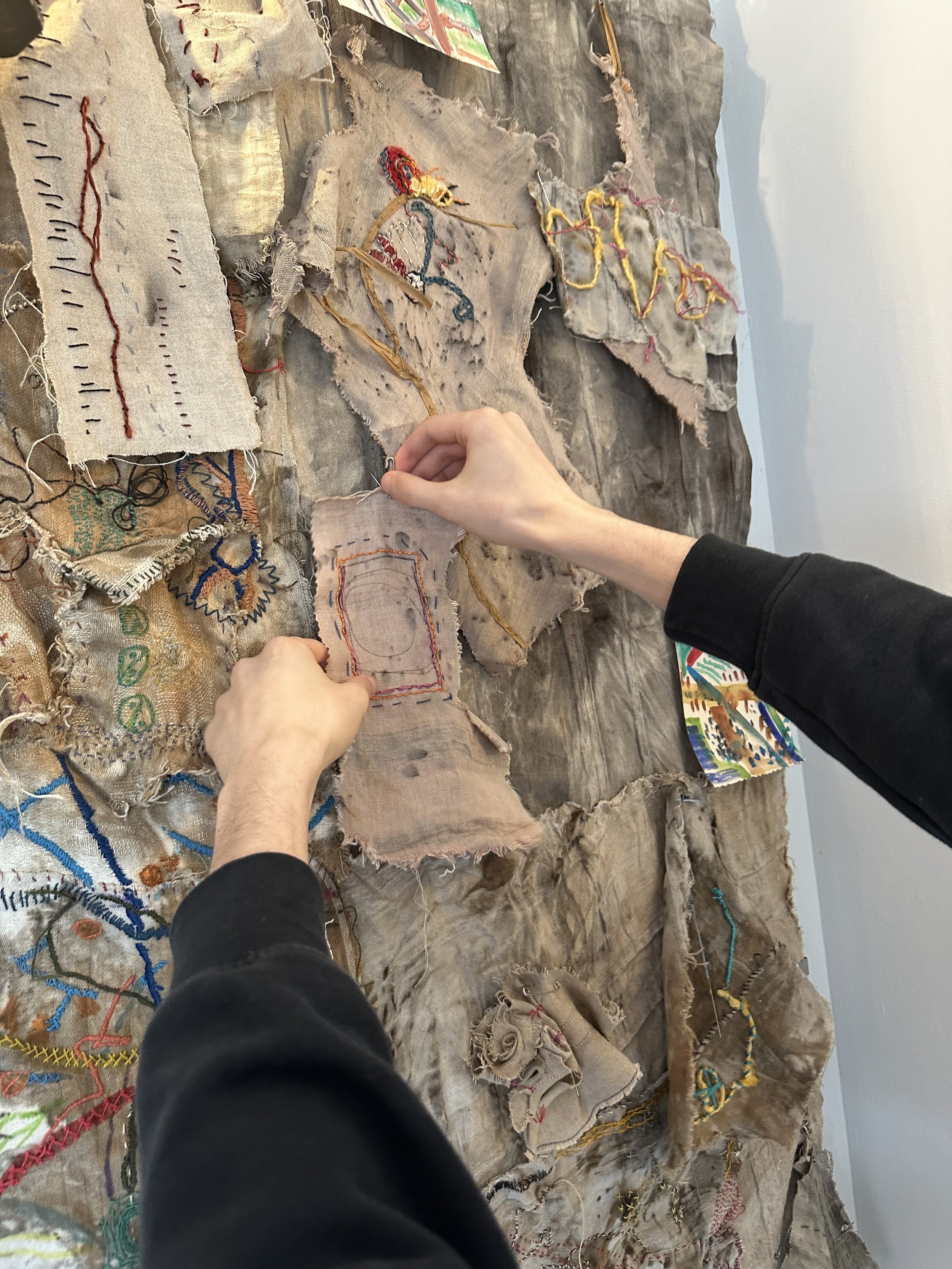
During the exhibition, we left out fabric swatches, threads and needles for visitors to stitch on and pin onto the panels. What became clear was that people were hesitant to begin without guidance or permission. In response, we devised three days of workshops. They turned out to be extremely popular, and revealing.
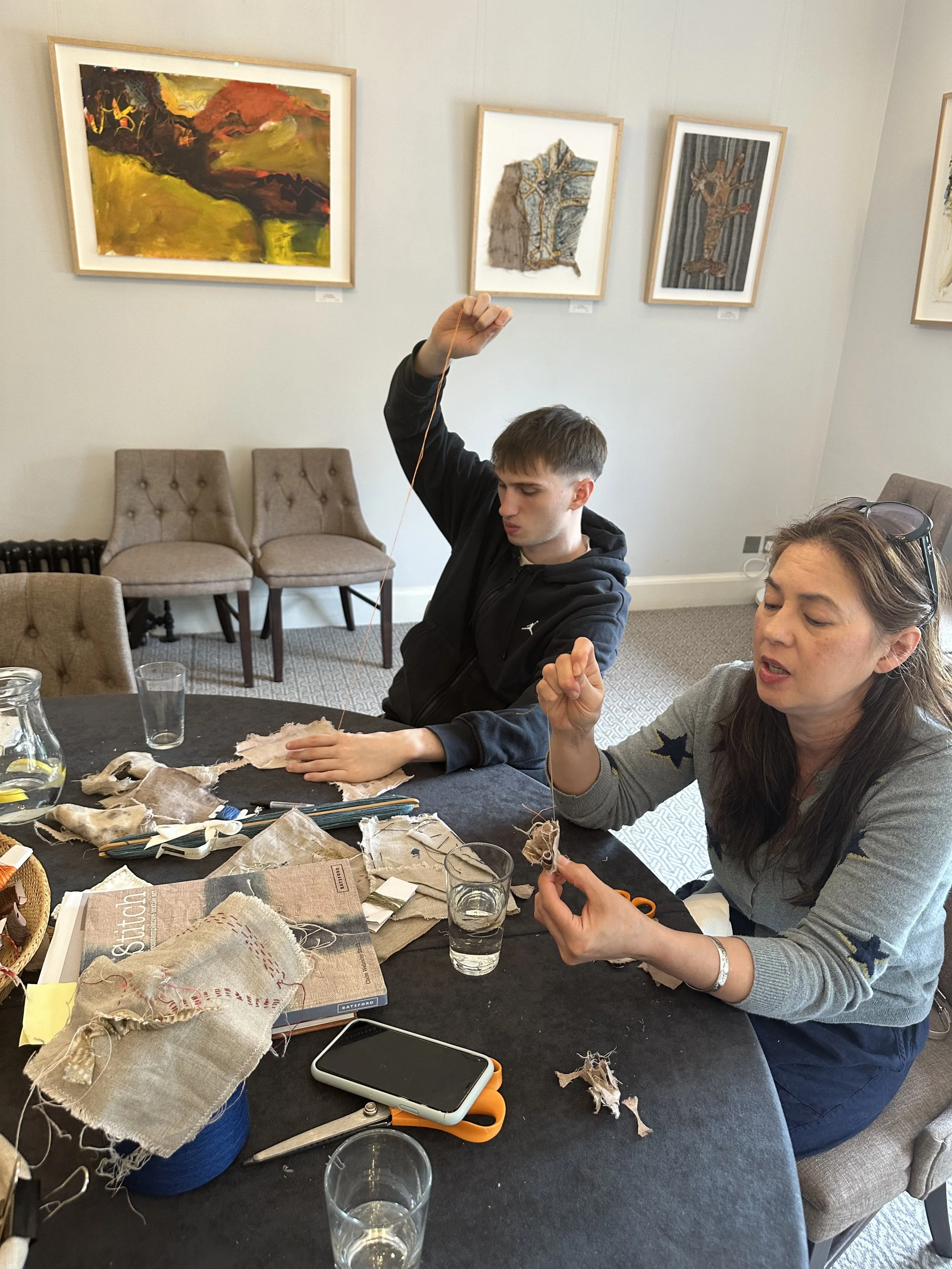
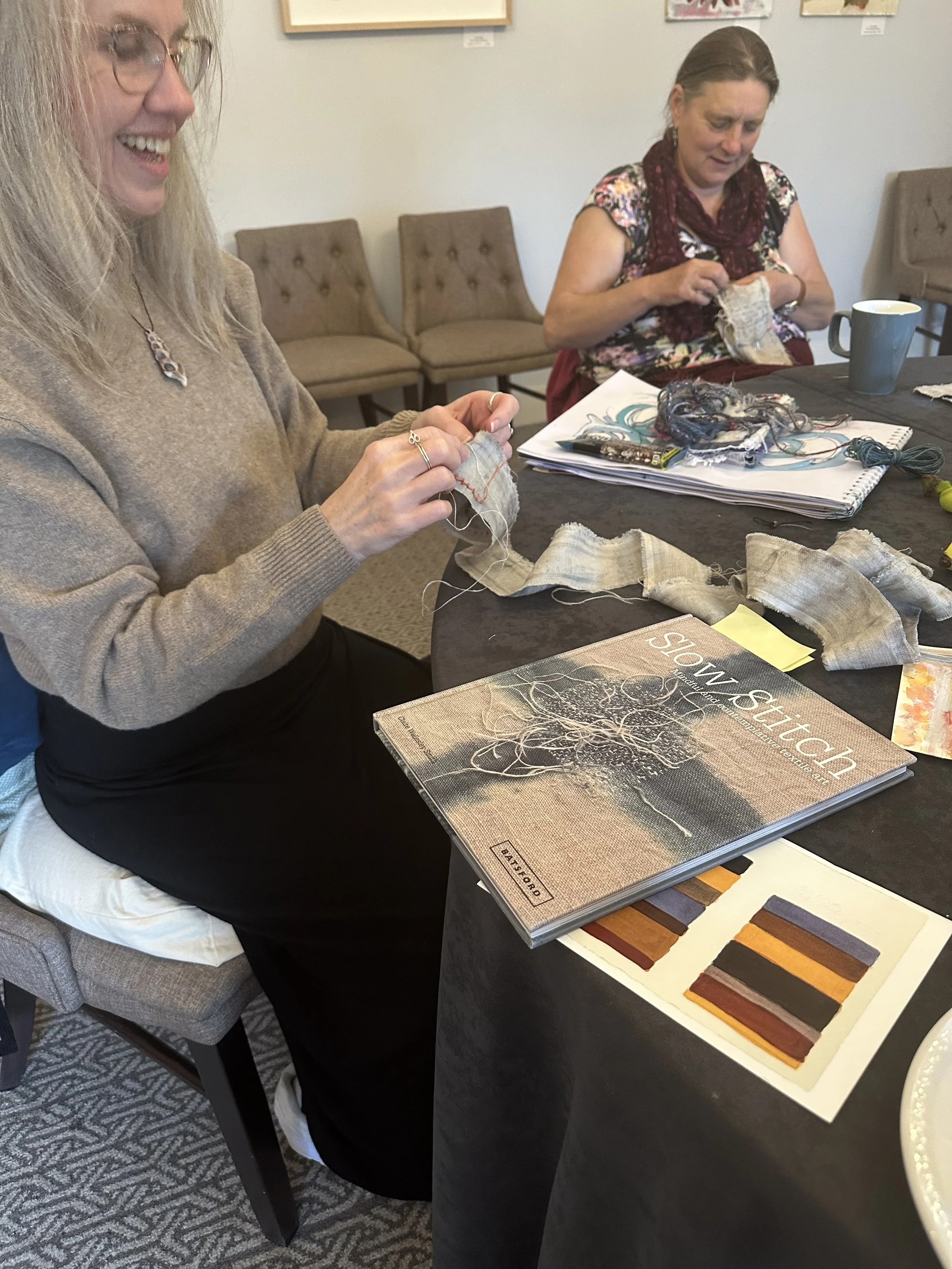
The atmosphere I hoped to create in these sessions was one of space and freedom—no strict rules, no pressure to produce something “good”. Once participants begin stitching, they often say they feel relaxed and content, happy to see where the needle and thread take them. Being comfortable enough to chat, share ideas and sometimes confidences, is a large part of that.
Spaces like the gallery at Bannatyne Hotel in Hastings and The RSA feel safe, which matters. Communal stitching has a very different focus from stitching alone. There’s a shared attentiveness, an energy that moves between people.
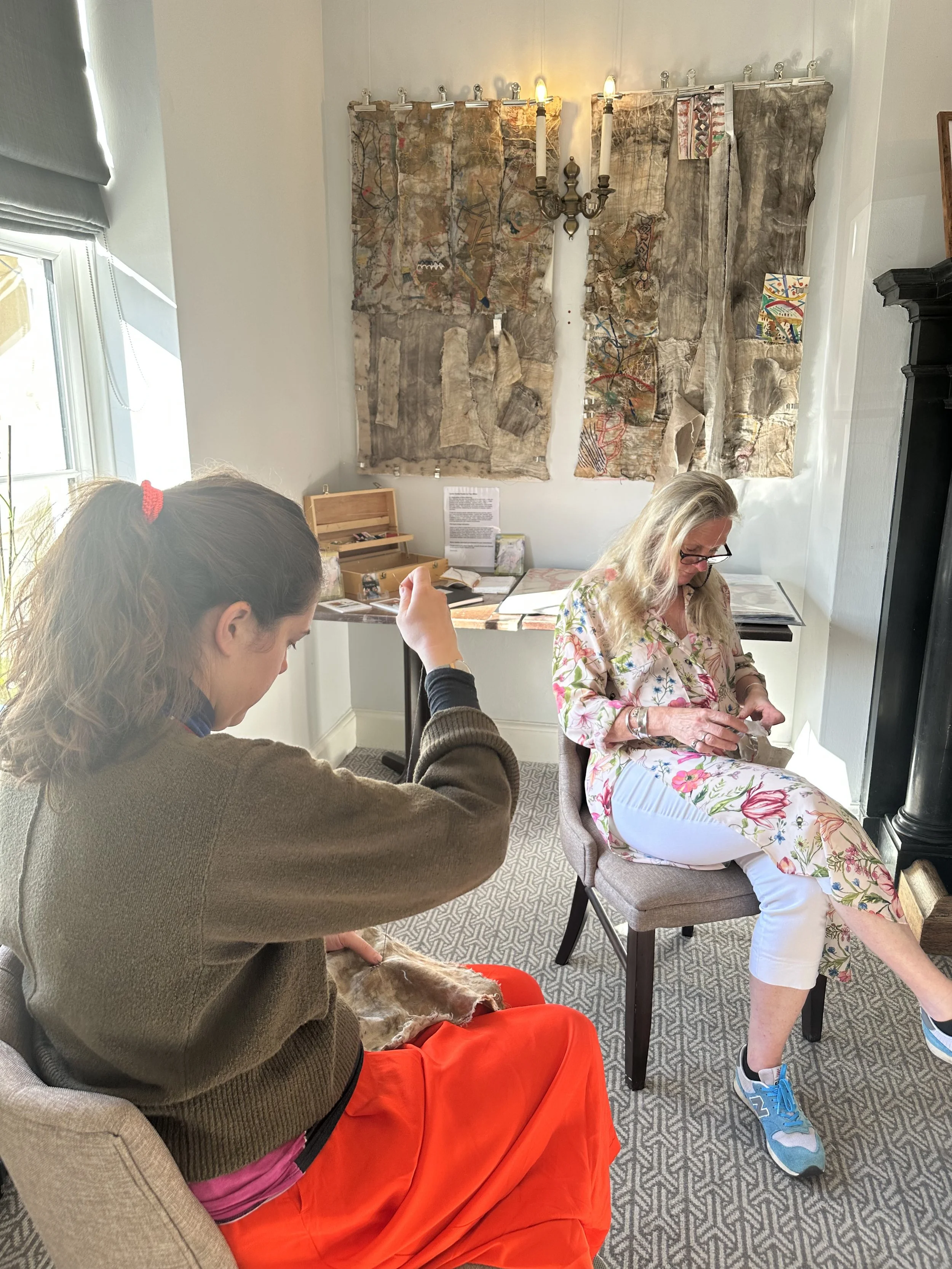
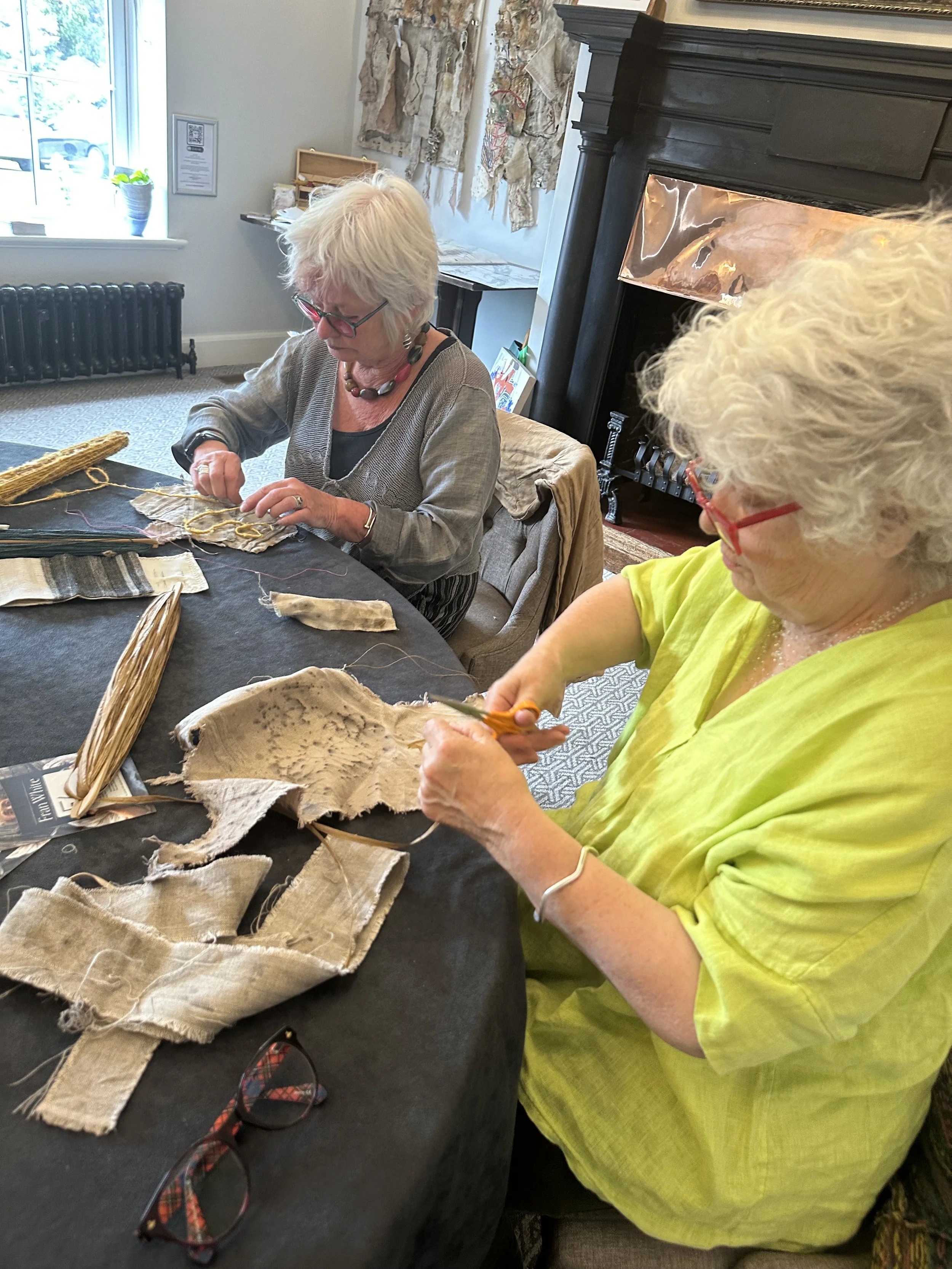
When Teaching Teaches Me Back
Teaching slow stitching has validated my own practice. It’s reinforced that nothing is off the radar—that I’m allowed to investigate and follow whatever feels relevant to me. I’ve been genuinely inspired by participants: some have responded directly to my portfolio work, choosing colours that echo my exhibition, while others bring work they’ve made at home. Seeing these responses has opened my eyes to new routes and methods I might explore myself.
Holding space for others is inspiring. It encourages me to look at my own work from a different viewpoint. Workshops have also taught me a great deal about vulnerability and trust. Everyone arrives carrying some level of uncertainty, and guiding them—helping them find their own way of expressing themselves—means they’re trusting me to help hold that space.
Balancing guidance with freedom is an ongoing, intuitive process. Some people need constant support; others are immediately independent. Both are equally valid.
Preparing for a Workshop
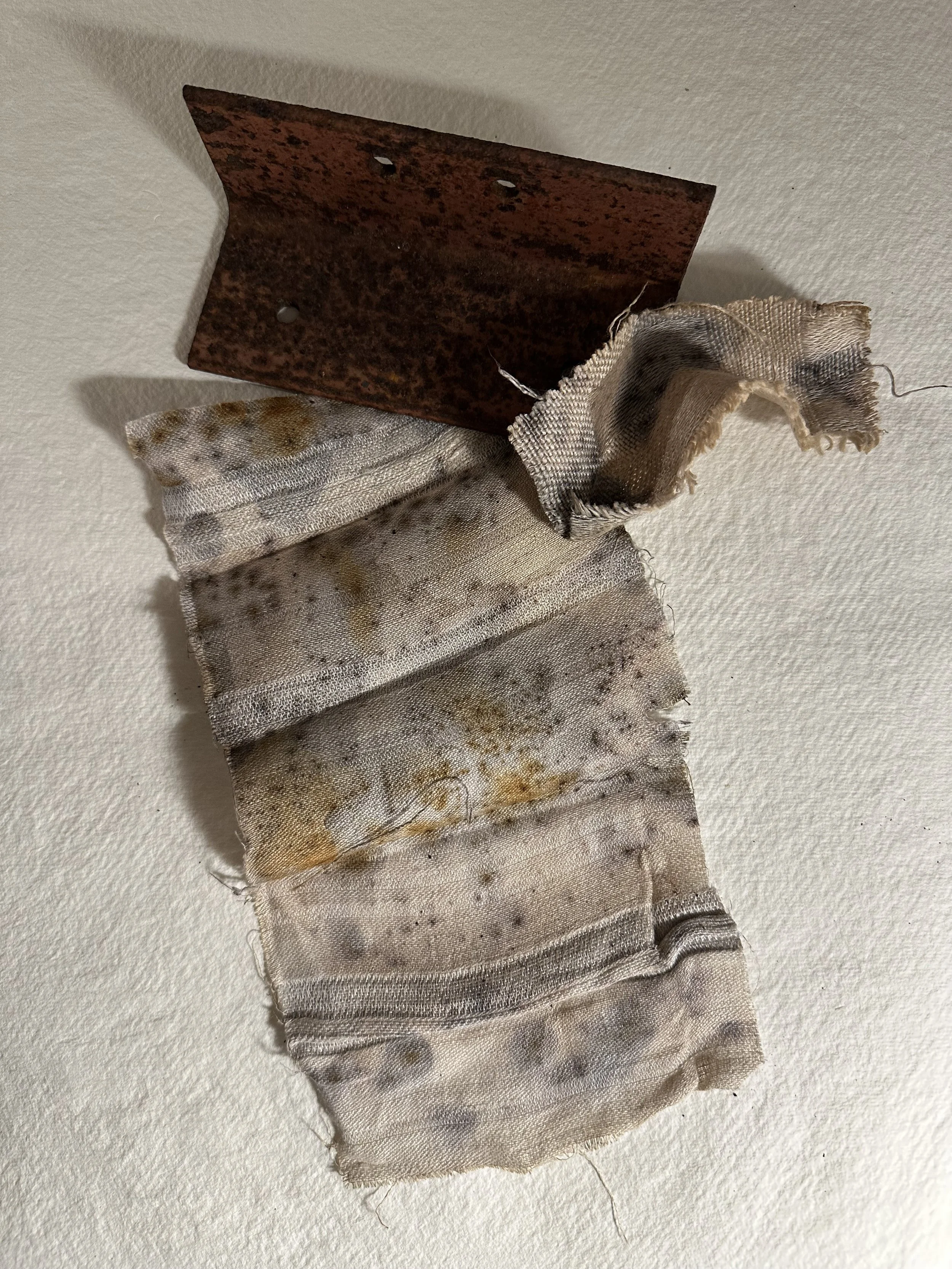
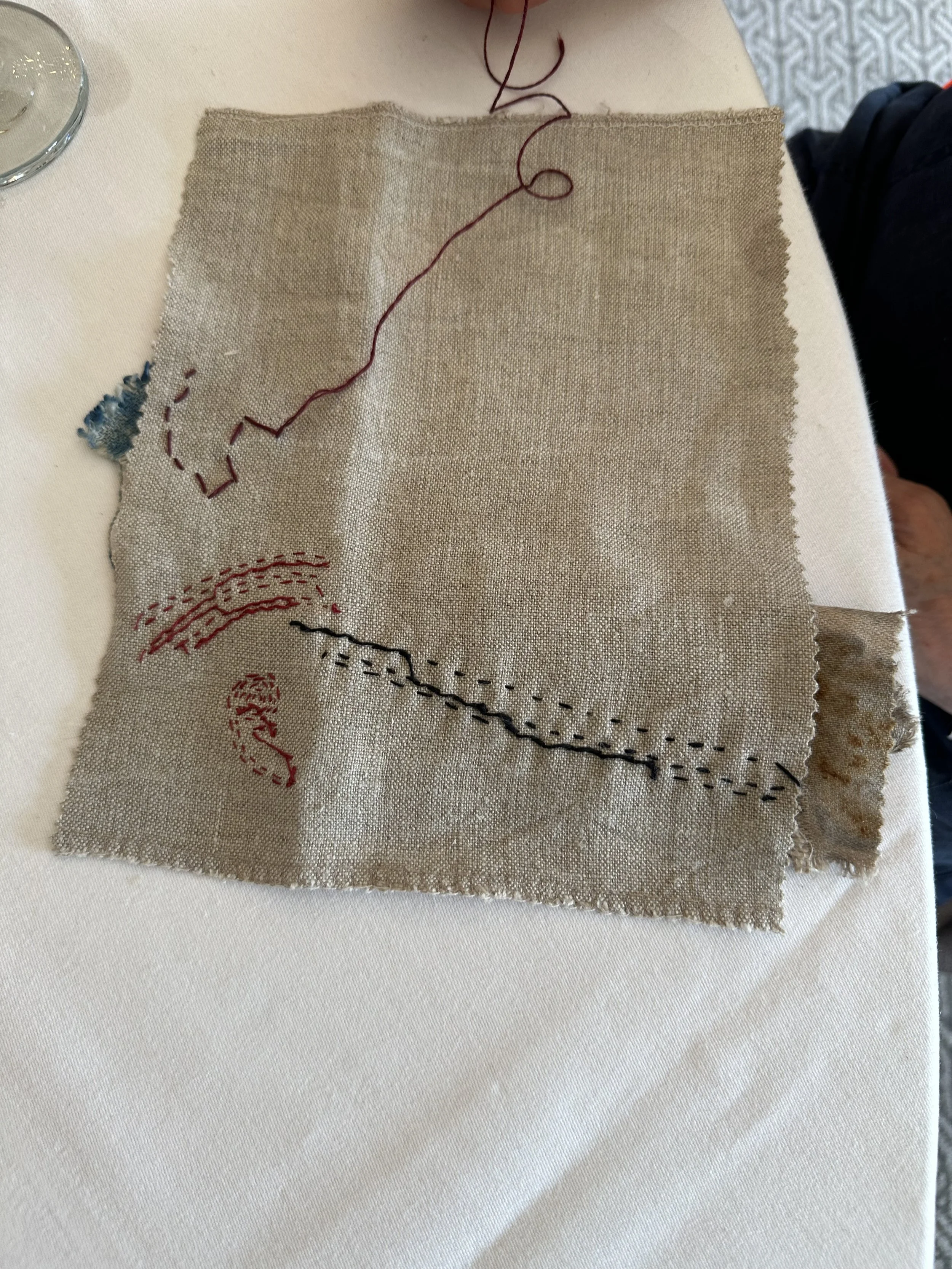
Practically, I prepare small stitching packs: a piece of eco-dyed linen, linen thread and a needle. I usually make four to six more packs than needed. Once stitching has begun, I introduce additional fabrics, threads and stitches, and sometimes share books or textile references that I find inspiring. If I’m travelling by tube, as I do when running workshops at the RSA, I’m mindful to only take what I can carry in my backpack.
Mentally, preparation is about becoming still and focused.
Materials are central to the work. I dye my own linen using rusty objects, tea and time. These fabrics—mostly whites, beiges and pale tones—are offcuts from my previous Linen Shop business. They respond beautifully to eco-dyeing and rust, carrying quiet histories within them.
Participants arrive with different expectations and levels of experience. I try to meet them where they are—encouraging them to follow the path they feel they need, while gently offering alternative ways of working. Above all, I hope they don’t feel pressure to follow strict guidelines or rules.
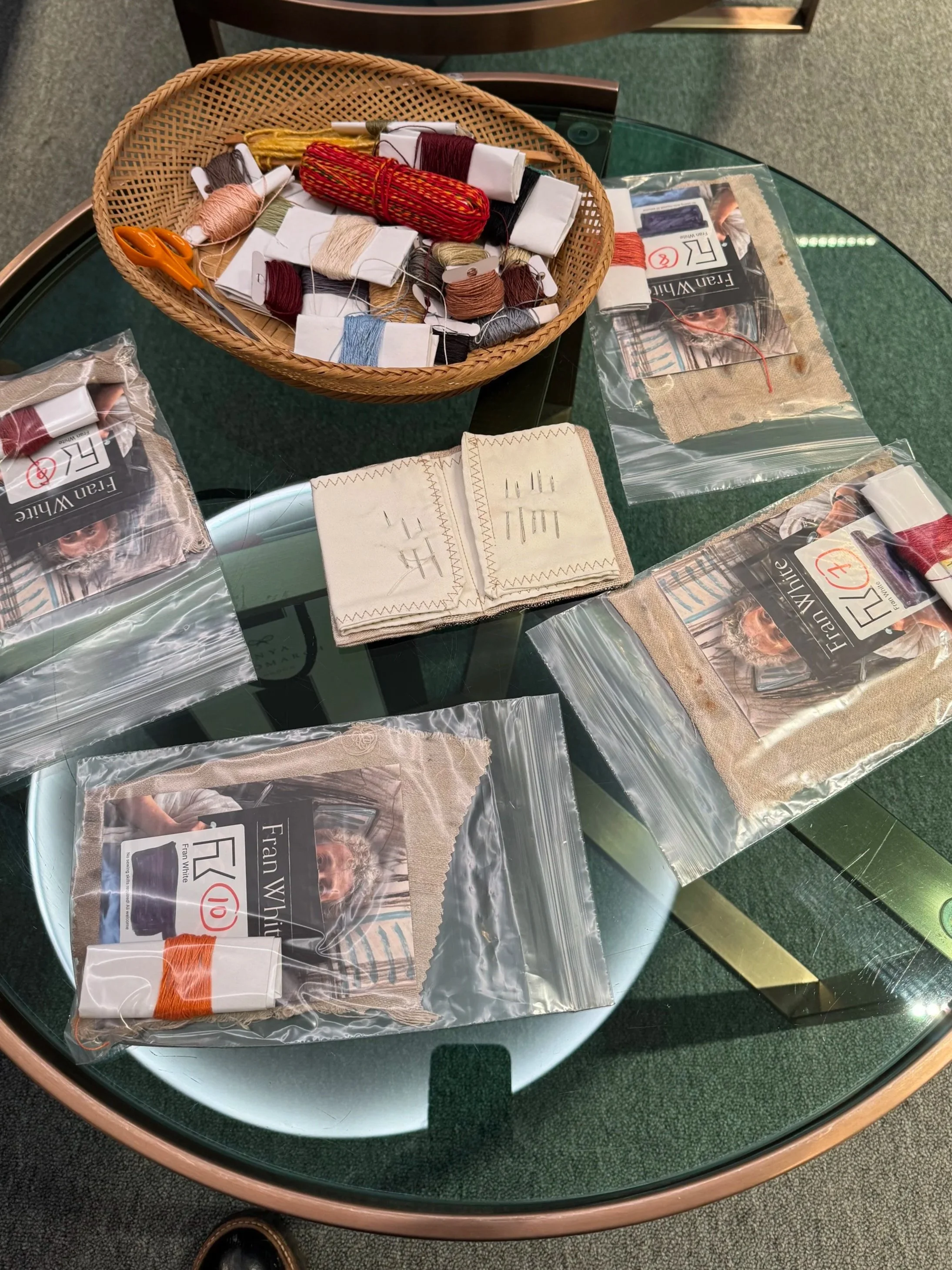
- Slow stitching workshop stitching packs with additional needles and thread available for participants use.
Creative Playdates
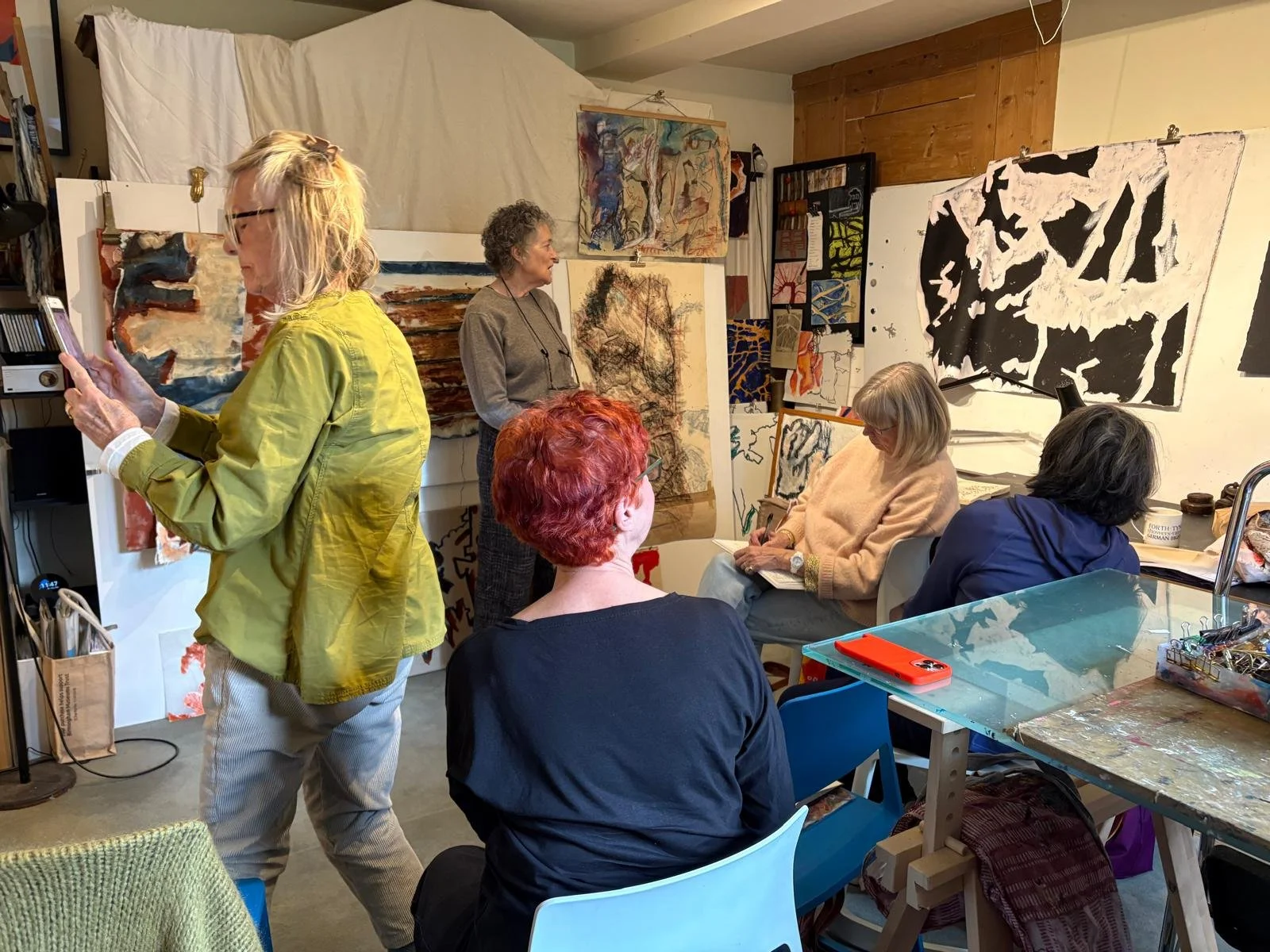
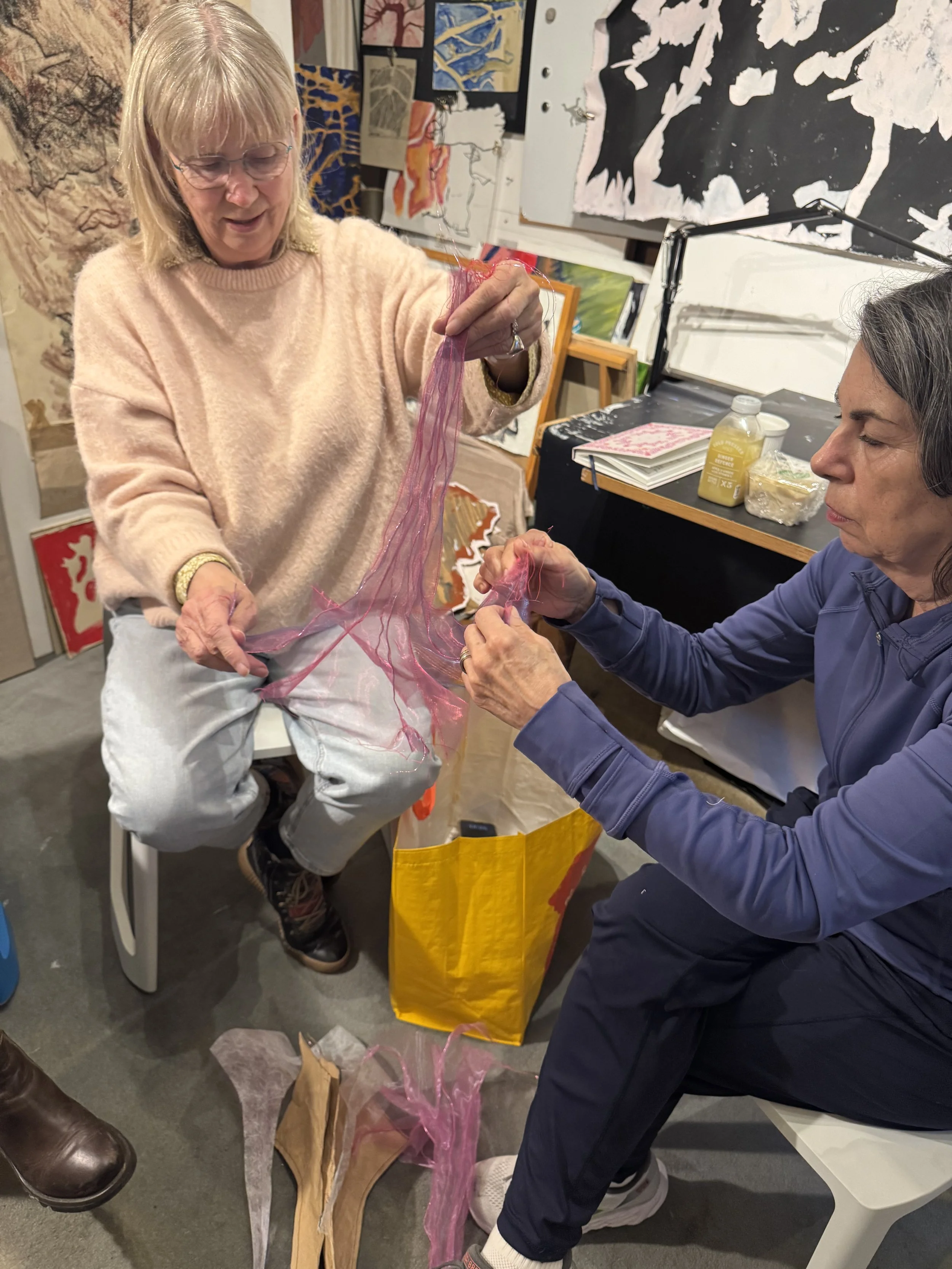
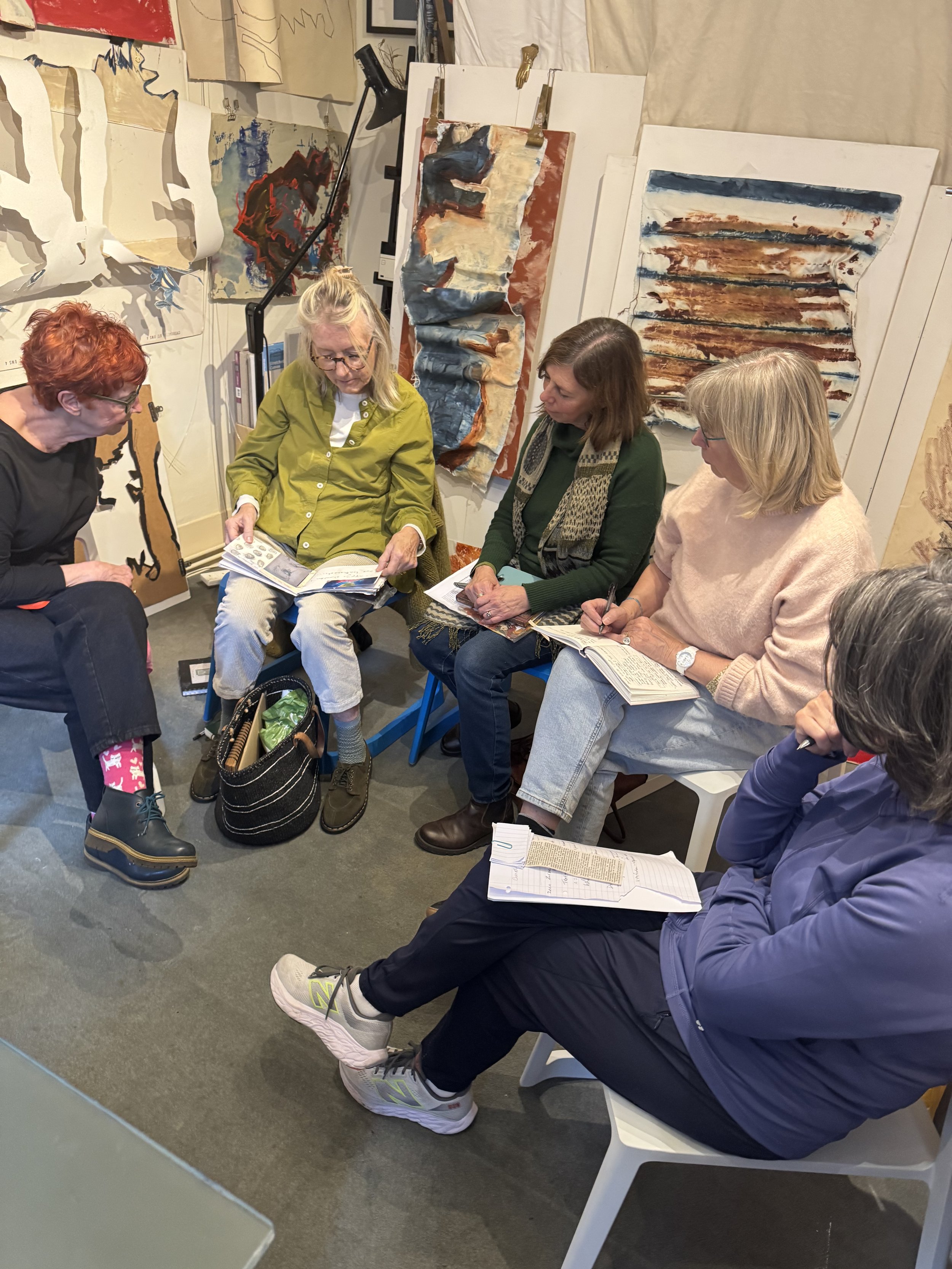
Alongside workshops, creative playdates with my fellow Pure artists have become an important part of my practice. They grew out of preparing for exhibitions and workshops together, visiting each other’s studios, admiring work and talking about new or unfamiliar ways of working.
These gatherings are informal and open-ended. We listen to one another and allow whatever needs to develop to do so. Conversation plays a vital role—it’s how ideas are exchanged, possibilities considered, and new ways of thinking emerge. You never quite know what might surface.
Often, these moments of connection feed directly back into my studio practice. I’ll follow a lead or approach suggested by someone else, allowing it to gently shift my own work.
Reflection
Sharing creative practice feels especially important right now because it is supportive and inclusive, and because it helps block out negativity. Community, care and curiosity are deeply intertwined in my work. With care, a community can be guided into a comfortable place where curiosity is free to develop.
To anyone hesitant about joining a workshop or creative gathering, I’d simply say: try it. What have you got to lose? You might be surprised by what comes up.
Over the years, I’ve attended many workshops myself, and I’ve probably learnt more about running them than I realised at the time—absorbing small details, watching how information is shared, noticing what feels supportive. Perhaps now I’m just passing the baton on, allowing others to do the same.