Learning to Stitch (and Knit)
I first learned to stitch when I was about six or seven years old. Like most children, I didn’t sit down one day and formally decide “today I will learn to stitch”!.. It was simply something that was all around me. My mother, a nanny, and possibly even Kathleen, my maternal grandmother’s lady’s maid, all had a hand in showing me the basics. Kathleen, in particular, would come to adjust our clothes as we grew up and out of them, lengthening smocked dresses at the waist and I suspect I learned as much by watching her do this as I did by doing any actual stitching myself.
My mother knitted and made hooked rugs. I mainly recall cooking alongside her however, rather than us stitching together.
What I do remember is that my early stitches were not very neat. In fact, I have a vague recollection of them being rather wobbly. But that, I now realise, is really the point…
Learning to stitch and, very often alongside it, learning to knit, is not really about producing perfect work from the outset. It is about coordination, patience, and learning how to follow a process from beginning to end. I sometimes wonder now whether I was actually introduced to knitting before stitching, as the rhythm of both feels so familiar.
Both activities teach the hands to work in sequence, to repeat small movements, and to build something gradually. There is a quiet discipline in that. As a child (or indeed an adult) you begin to understand that progress happens one stitch at a time, whether with a needle or a pair of knitting needles.
When I was young, I don’t recall finding stitching particularly difficult, although introducing my grandsons to slow stitching - renamed random stitch by Sam - a few years ago now makes me wonder if I’ve just forgotten the early struggles. One very common mistake I see beginners make is bringing the thread up through the fabric and then taking it around the side instead of back down through the cloth. It is such a small thing, but it shows how much stitching relies on spatial awareness and rhythm.
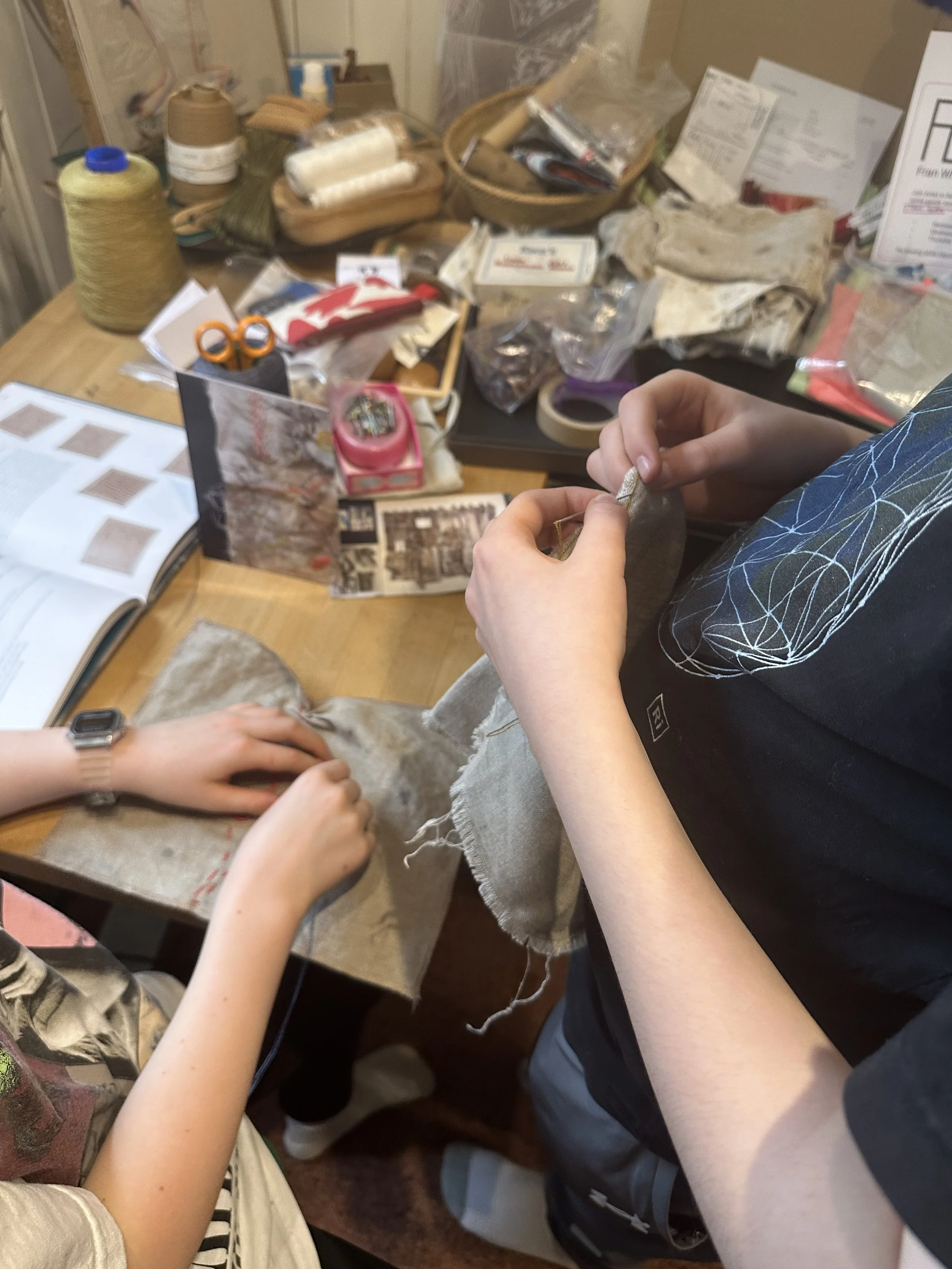
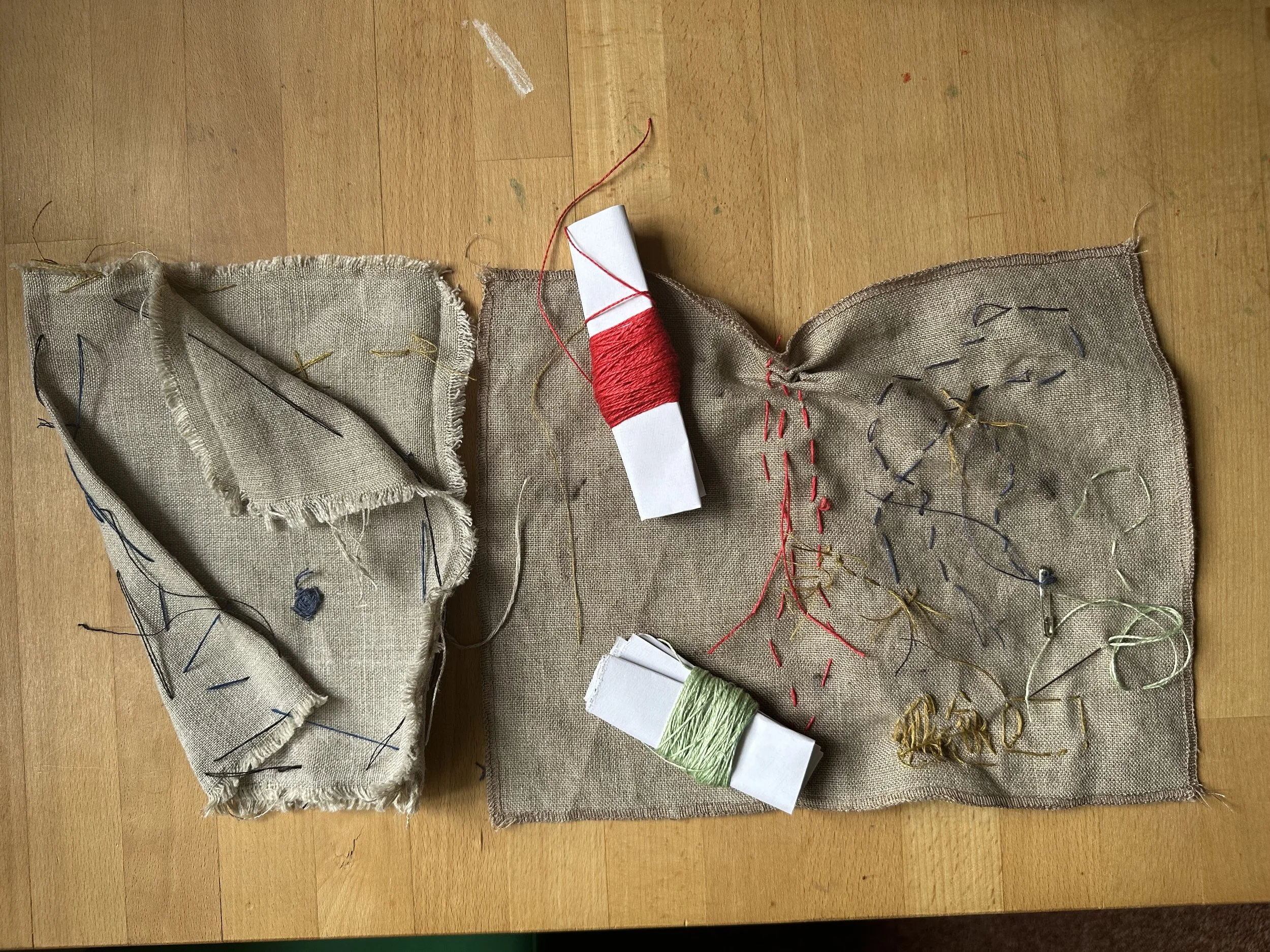
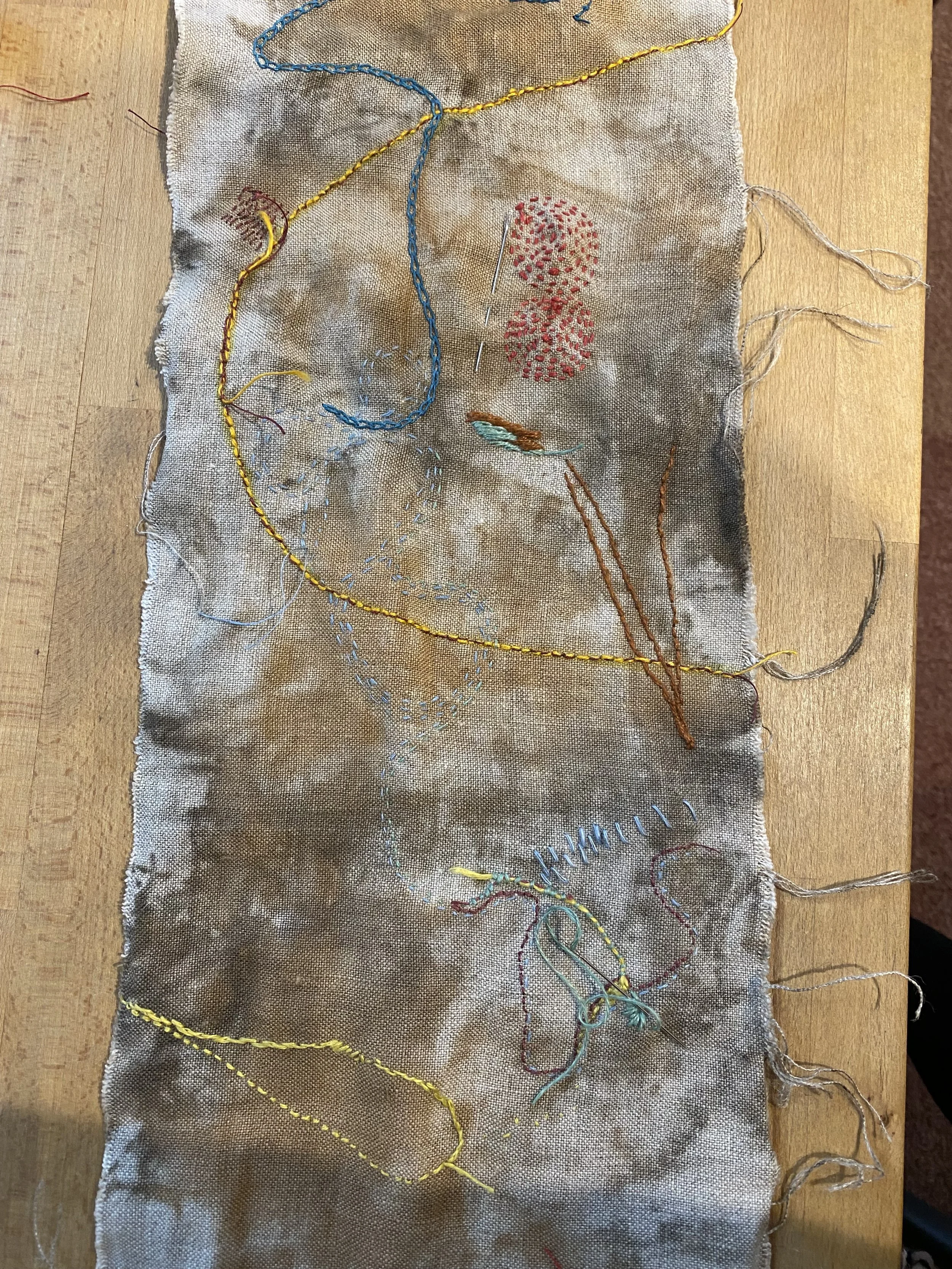
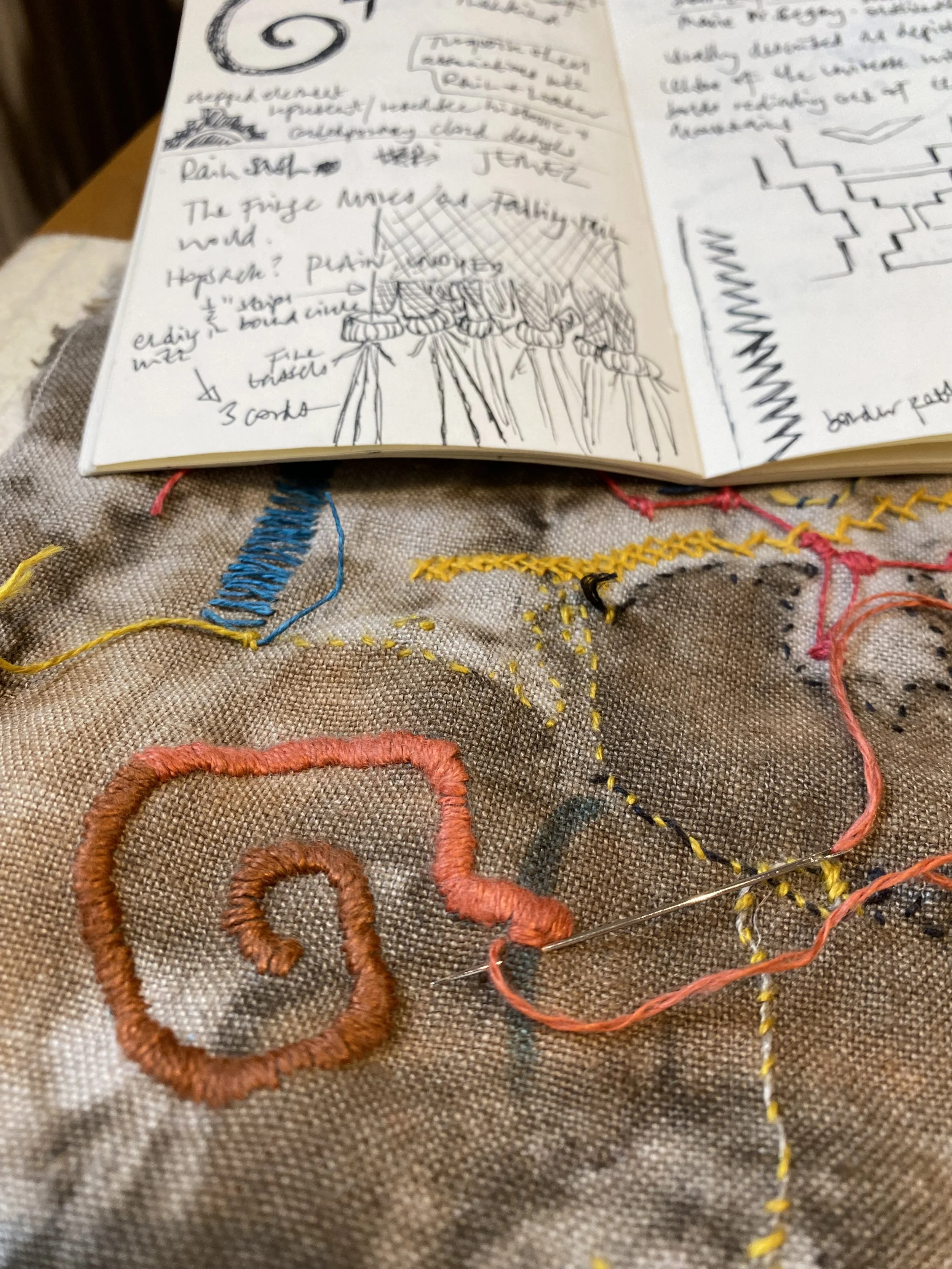
I did find some of the embroidery terms quite confusing though, such as couching, bouillon etc. In the early 1960s at my first boarding school we had embroidery sessions where we worked on a project on BINCA using cotton threads or printed projects such as a tray cloth, for which we stitched with embroidery silks. While we worked Miss Boz read to us in the room to the left of the Front door. I was reminded of this by my sister Bridge recently. She went to Knighton House as well but, being 7 years younger we were not there at the same time.
At my next school we were given a very thorough introduction to hand sewing, making a sampler, a child’s outfit and various other tasks which seemed to take an impossibly long time, but had to be completed before we could graduate to the thrilling prospect of an actual mechanical Sewing Machine. Bridge also reminded me this was under the heading of Domestic Science, where we were also taught to cook and how to wring out a dishcloth properly.
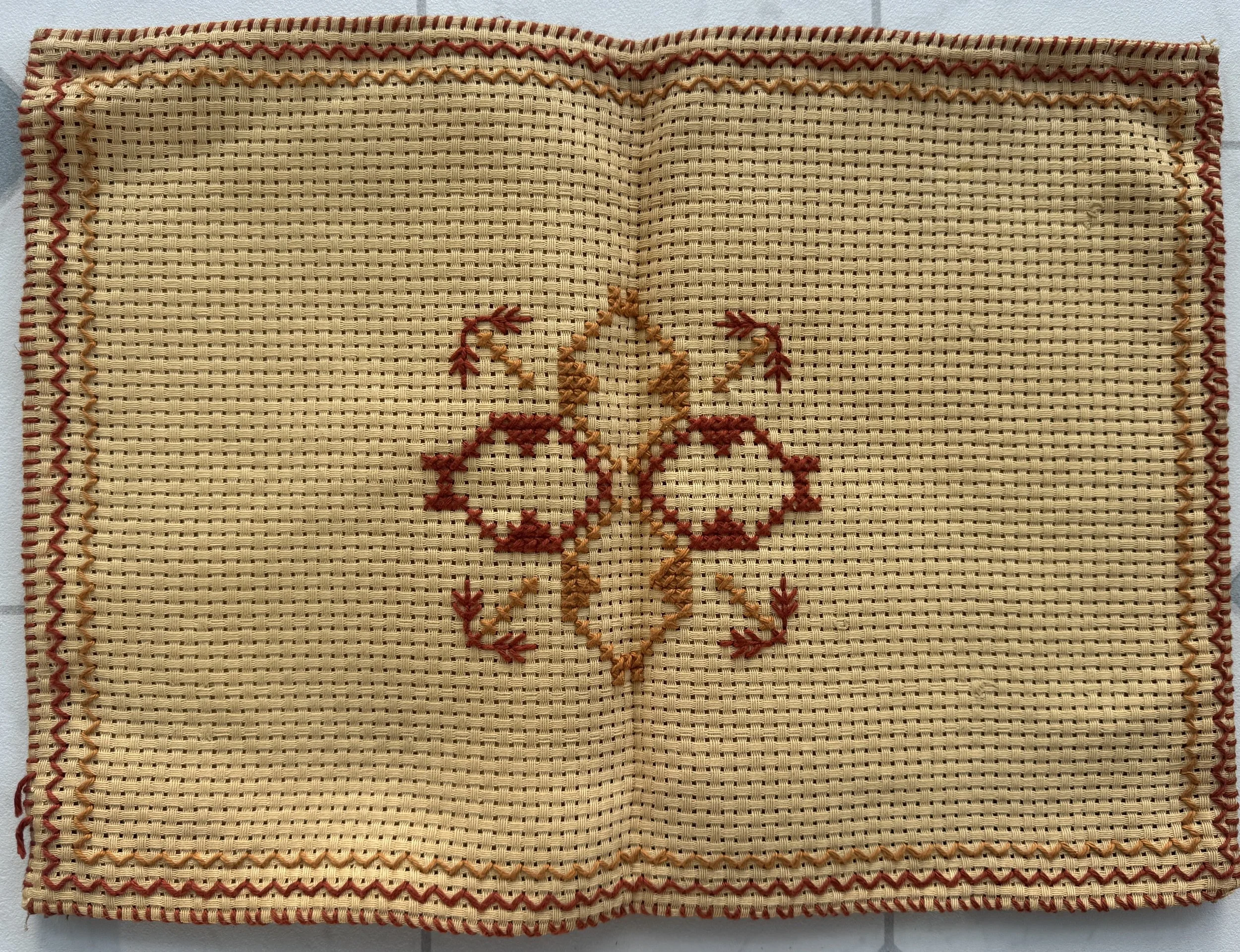
There is also something to be said for the materials themselves. I strongly recommend starting with BINCA fabric. BINCA has an open weave, with clearly visible holes, which removes a great deal of the frustration. The needle has somewhere obvious to go, and you can focus on the action rather than the uncertainty. It transforms what could be a fiddly task into something far more manageable, even enjoyable. A further reminder from my sister Bridge was the amount of peculiar and possibly rather useless objects we made in the sessions with Miss Boz. One of which my mother produced just the other day, a BINCA project which could be a cushion cover and/or somewhere to keep your nightie, which was a particular thing in my youth.
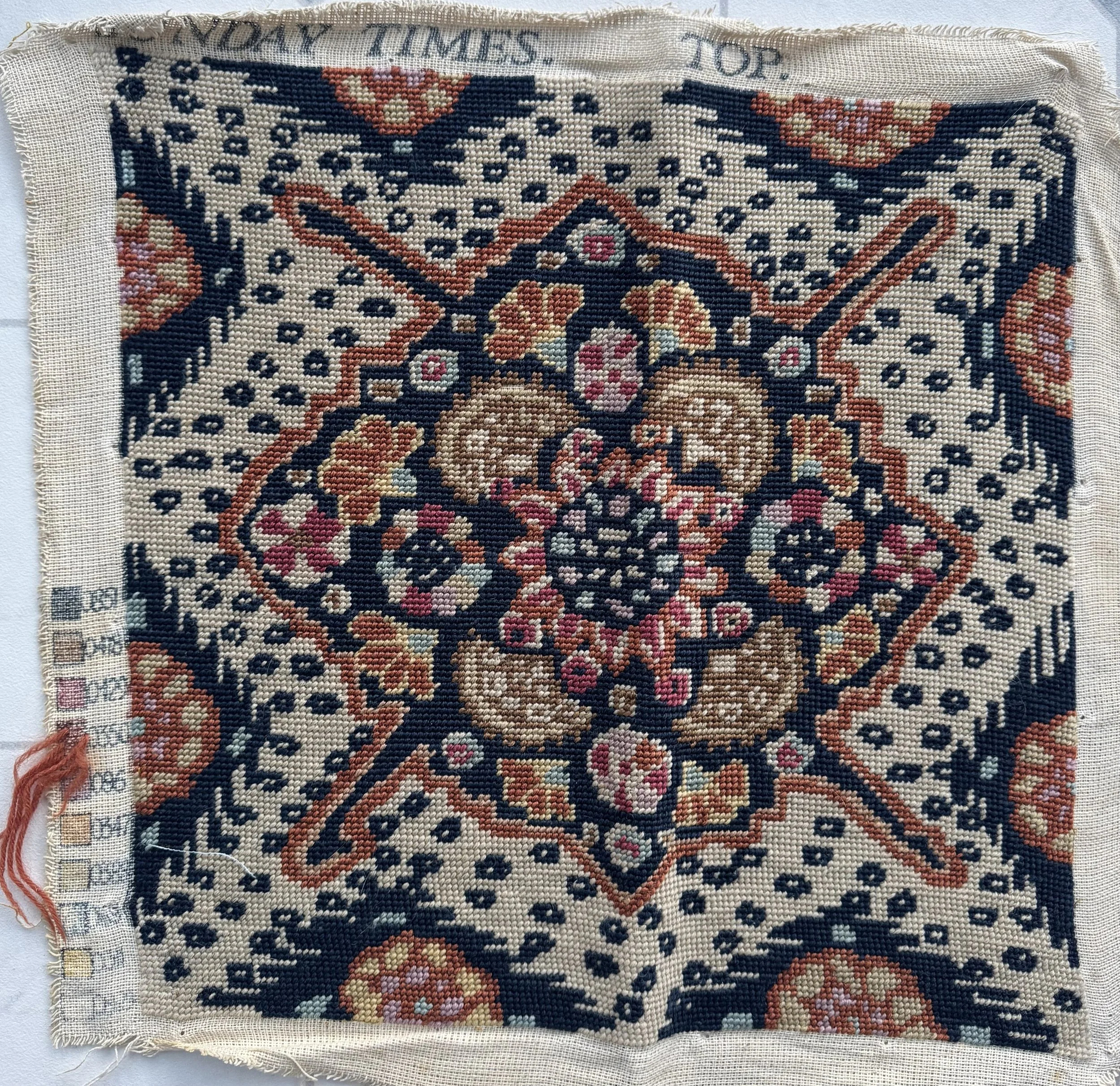
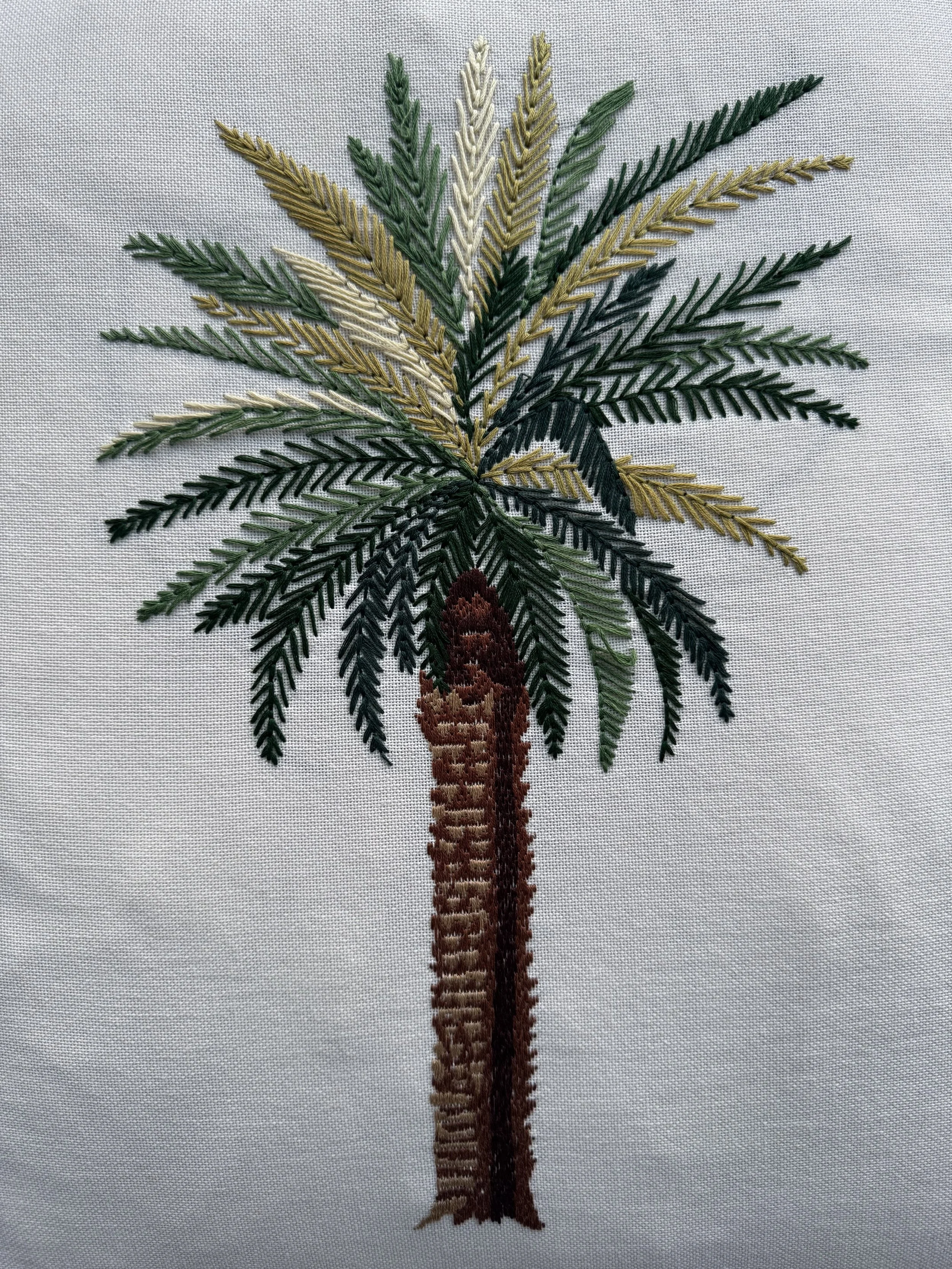
My own early projects made at home were modest. I remember making a tiny conical hat for a Barbie type doll using fabric wrapped around a piece of cardboard. This was worked on in Donegal, the upstairs family room where we all sat together on large comfortable sofas to chat and/or watch tele. Donegal was named after one of the ships my paternal great grandfather sailed on. Later, I stitched a picture of a fish on BINCA, which I kept for many years. I was proud of it, though I eventually parted with it. I’m not entirely sure whether it had actually been mine or my sister’s, which perhaps says something about how long it had been around.
In my early teens, I made many of my own clothes using paper patterns, a practice that has become increasingly popular again in recent years. My father was also very practical and, having been in the Navy, knew how to sew - I wonder if he had a hand in my creativity!
A sense of pride in ones achievements is important and stitching and knitting gives you this in a very tangible way. In a world where so much is instant and intangible, the act of making something slowly, by hand, has a real value I think.
There are, of course, practical lessons too. Handling a needle teaches care. Using scissors introduces responsibility. I remember the emphasis on safety being quite firmly “drummed into us,” as children. Even now, I still lose needles and occasionally spill a box of pins - I keep a magnet nearby for precisely that reason. So the learning never really stops.
It took me a while to become a confident stitcher because I was sensitive to any kind of criticism from an early age. Although there must have been someone who encouraged me to continue. That or I was just a driven young creative.
More than anything though, I now truly appreciate that stitching and knitting teaches us to slow down. It requires us to look closely, to make small decisions, and to accept imperfection. It helps build focus in a quiet, steady way.
I discuss the benefits of slowing down in more depth in the below video created by The RSA.
If a person feels unsure about stitching, my advice is the same now as it would have been when I first started: have a go. The stitches may be uneven, the wool may tangle, and the thread may twist. None of that really matters.
What matters is that you begin.